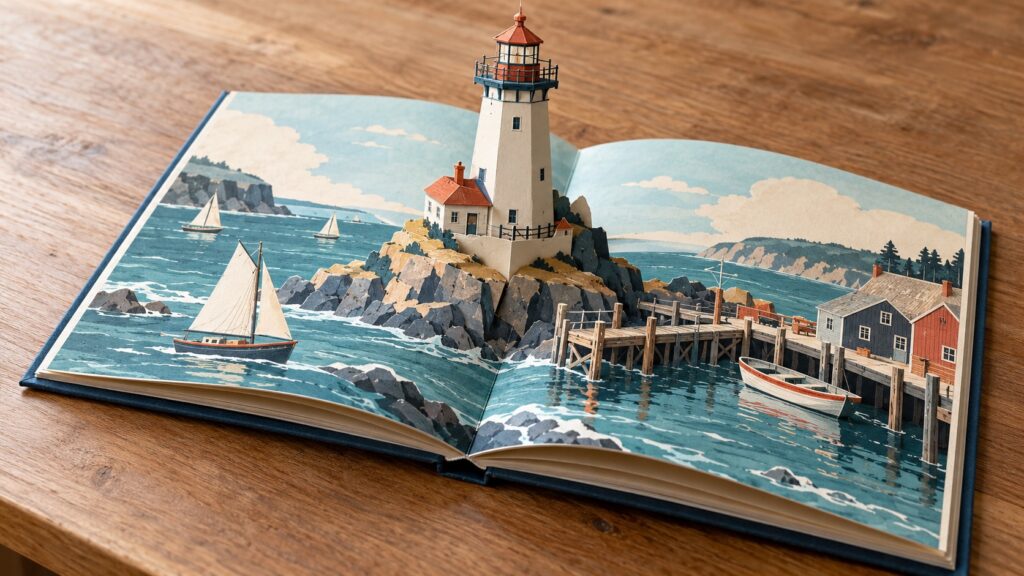
A pop-up book has to work as a book and as a moving paper structure. A striking illustration cannot rescue a mechanism that catches when the spread closes, and an elegant paper dummy cannot reveal how printed stock will behave until it is sampled. For publishers and creators evaluating custom pop-up book manufacturing, the practical question is how design, printing, assembly and inspection will be connected.
Start with the experience and a clear brief
Define the closed size, number of spreads, target audience and what should happen when each spread opens. Is the project a children’s story, an educational title, a collector’s edition or a companion to a tabletop game? A simple dimensional scene and a spread with several moving elements need different development and assembly plans.
If you already have paper engineering files, send the working mock-up, cut and score lines, assembly notes and a short opening video. If you have only an illustrated concept, say so. The project then needs a structural development stage before a reliable production specification is possible. Ask the proposed pop-up book manufacturer who will engineer the mechanism and prepare its dielines; responsibilities may differ between the printer, a specialist paper engineer and other production partners.
Approve a white dummy before artwork is final
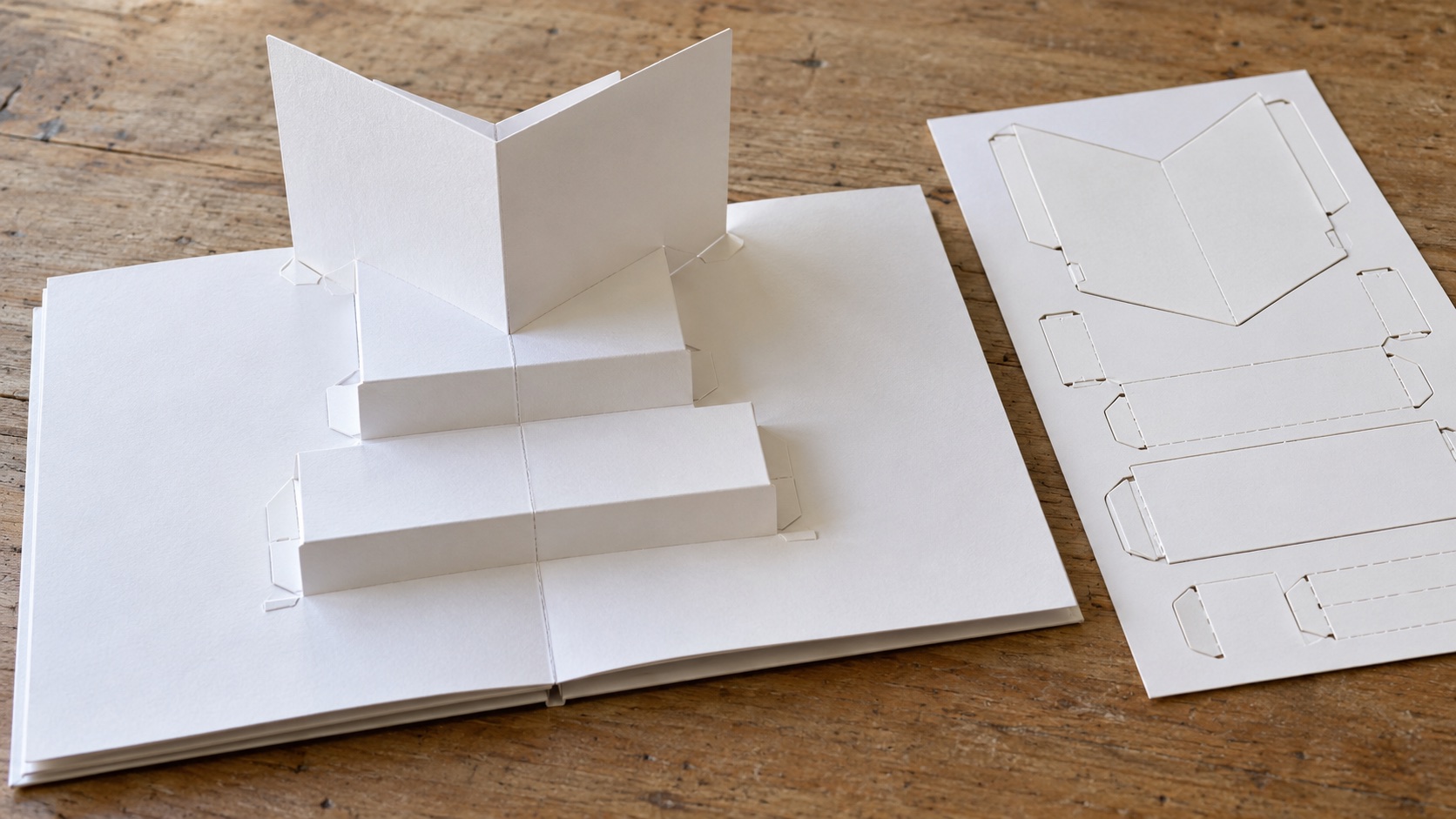
A white dummy is an unprinted, assembled model of the book. It lets the team test each fold, attachment point and page turn without the distraction of finished art. Check whether a structure rises at the intended angle, clears the gutter, collapses fully and stays within the closed book’s edges. A shape that works on one spread can still catch on the next page or add too much thickness at the spine.
Paper grain, caliper and stiffness affect these movements. A substitute sheet can help explore an idea, but a later sample using the intended stock is needed before production approval. Keep a version number for every revised dummy, and record which mechanical changes are approved.
Build artwork around cut, score and glue areas
Once the mechanism works, illustrations must follow the actual component shapes. The production file should distinguish printed artwork from cutting lines, score lines and glue areas; the assembly team also needs to know which side of each piece is visible and where it attaches. Bleed and safe areas matter around shaped edges just as they do on a conventional printed page.
Review a printed and assembled proof rather than approving flat artwork alone. At the fold, an image can break across two surfaces or disappear behind another piece. Check color across the background spread and separate movable parts, the alignment of printed details after folding, and the appearance from the reader’s normal viewing angle. For the broader book specification, our custom book printing quote checklist covers size, stock, binding and packing information.
Turn printed sheets into working spreads
In pop-up book printing, printing is followed by die-cutting, scoring, folding and assembly. The number of individual pieces, attachment points and repeated hand operations can have as much effect on cost and schedule as the number of pages. Design changes that look small on screen may alter the die layout or the order in which a spread must be assembled.
Each piece should be matched to the correct artwork version, cut cleanly and attached in the agreed position. Glue that spreads beyond a tab can mark the art or obstruct a moving part; a weak or misplaced joint can fail after repeated opening. Agree on an approved, fully assembled pre-production sample so that print, binding and any specialist hand assembly are judged together. Niceam Product can review the printed book, packaging and project coordination brief; the paper engineering and assembly route should be confirmed for the specific design.
Inspect the motion, the book and the pack
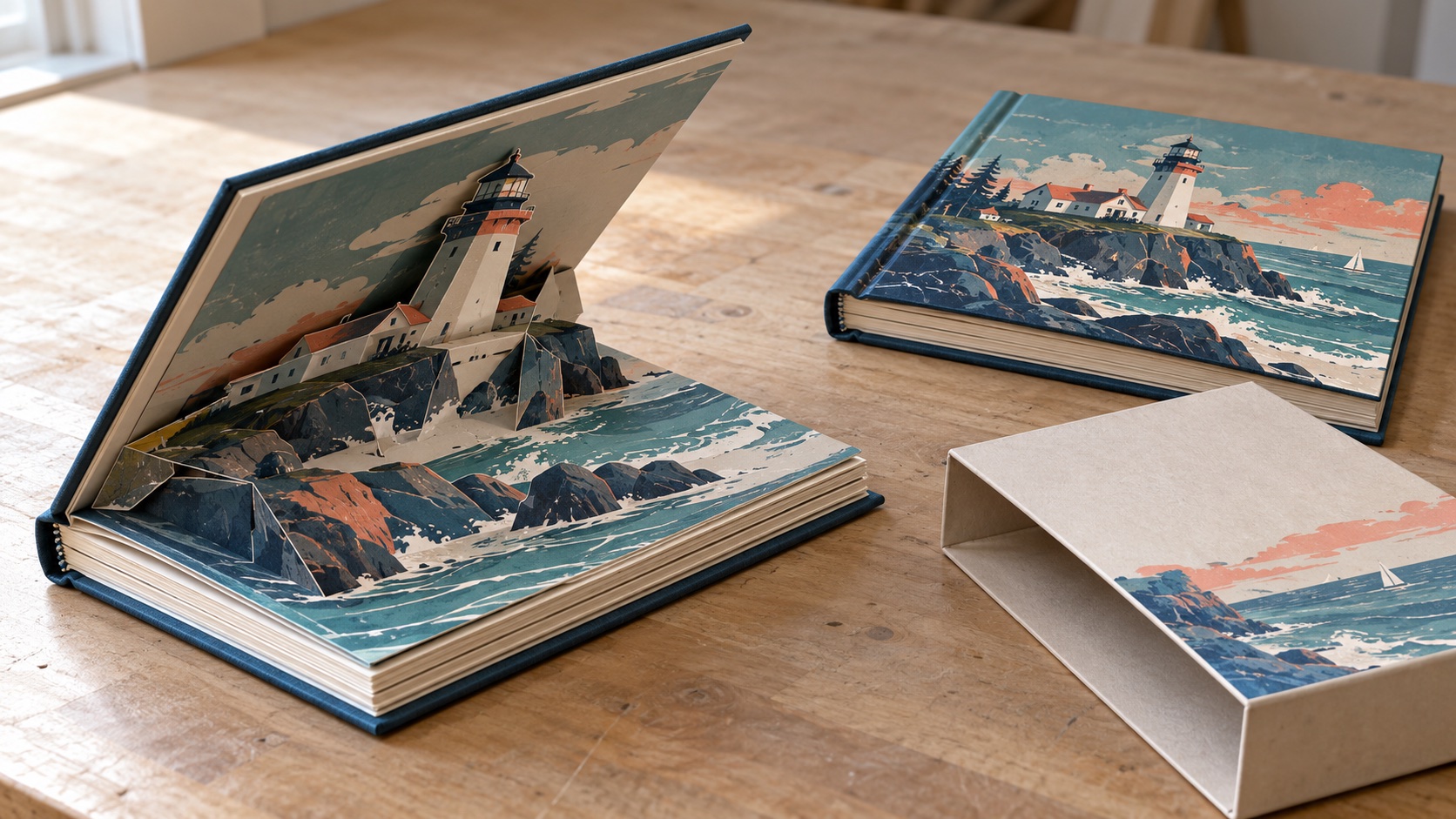
Quality checks should follow the reader’s actions. Open and close each sampled spread repeatedly, watch for sticking, torn scores, detached tabs and parts that protrude when closed. Inspect page order, trim, color, binding and cover finish as well. The book should close without force and fit its retail sleeve, slipcase or protective carton without crushing the paper structures.
Agree on inspection points and the sampling method before mass production. A digital proof can catch text and artwork errors, but it cannot demonstrate that a 3D pop-up book moves reliably. The finished sample should be checked after packing too, because a tight wrap or poorly sized box can damage an otherwise approved mechanism.
Connect the book to a game or collector’s set
For a board game publisher or TTRPG creator, a pop-up book may be one part of a larger retail product: a storybook paired with cards, maps, dice or an illustrated box. That changes the packing brief. Give the board game manufacturing team one component list for the complete set, including how the book is protected and where it sits in the insert. Our hardcover, paperback and board book guide helps compare the underlying book formats before adding interactive mechanisms.
What to send for a project review
To discuss a custom pop-up book, share the trim size, spread count, intended movements, artwork status, any working dummy or opening video, target quantity, preferred paper and cover, destination market and packaging requirements. State whether structural files are ready or paper engineering support must be scoped. If it belongs in a game set, add the full component list and packing plan. Send Niceam Product your brief so the team can review the production route and the information needed for a project-specific quote.