How to Choose a Tabletop Game Manufacturer for a Custom Project
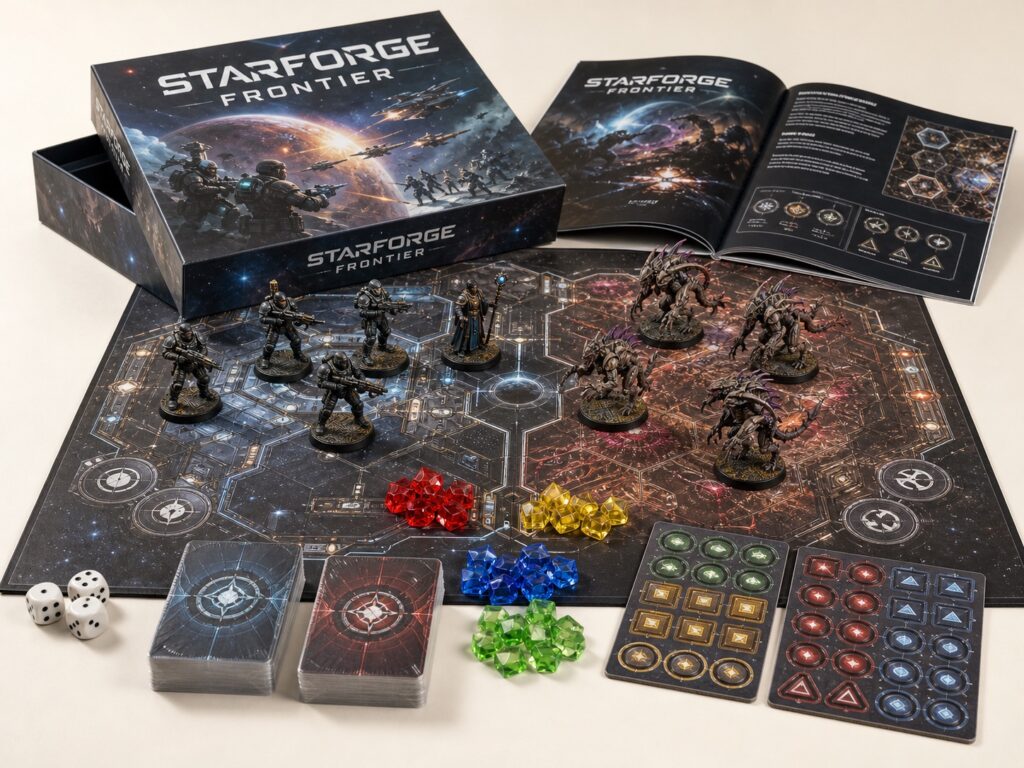
Choosing a tabletop game manufacturer is more than comparing unit prices. A custom game may combine cards, boards, books, tokens, dice, miniatures, metal pieces and a fitted box. Each part has different production requirements, and every component must arrive in the correct quantity and condition.
The right manufacturing partner should understand the complete product, identify risks before mass production and provide a clear route from files to finished games. The following checks can help publishers compare suppliers more effectively.
1. Check the manufacturer’s complete production scope
Start with your bill of materials. A card-only project is different from a tabletop game that includes a mounted board, rulebook, punchboard tokens, wooden pieces, plastic miniatures and metal accessories. Ask which parts are produced directly, which require specialist processes and how all suppliers are coordinated.
A capable tabletop game manufacturer should review how the components work together, not quote each item in isolation. Explore Niceam Product’s custom game manufacturing capabilities, including printed products, books, packaging and mixed components.
2. Look for practical specification review
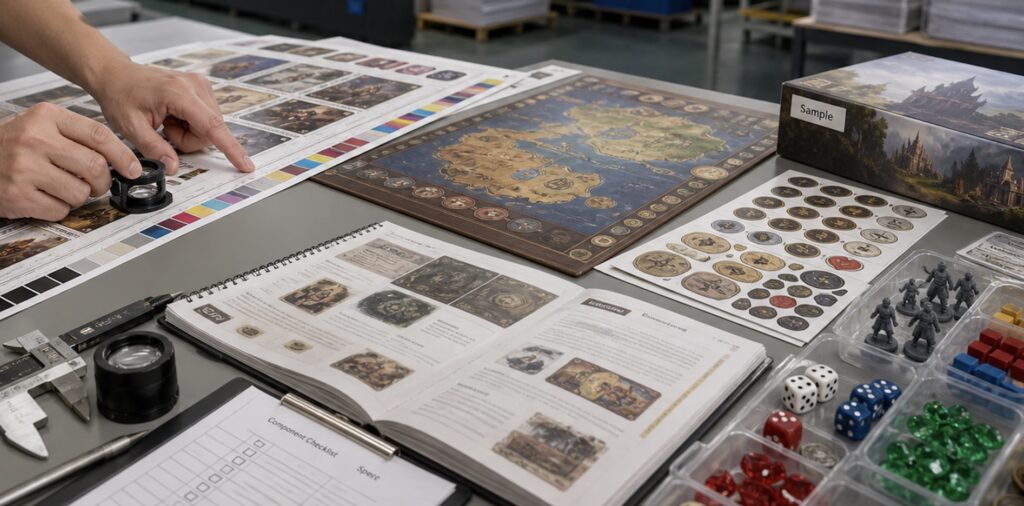
A useful supplier does not simply accept artwork. The team should check finished sizes, materials, thicknesses, tolerances, finishes, packing order and box dimensions. They should also flag details that may cause visible color differences, weak inserts, difficult assembly or unnecessary shipping volume.
Before requesting a quotation, prepare card and board dimensions, page counts, component quantities, preferred materials, packaging structure and destination country. Clear specifications make quotations easier to compare and reduce assumptions.
3. Evaluate sampling before mass production
Samples serve different purposes. A digital proof can verify content and placement, while a physical prototype can test size, material feel, component fit and the overall unboxing experience. A closer production sample may be required when color, special finishes, tooling or assembly details are critical.
Ask what the sample will represent and what may still change in mass production. Keep a signed specification and approved reference so both sides use the same standard during production.
4. Ask how quality control covers mixed components
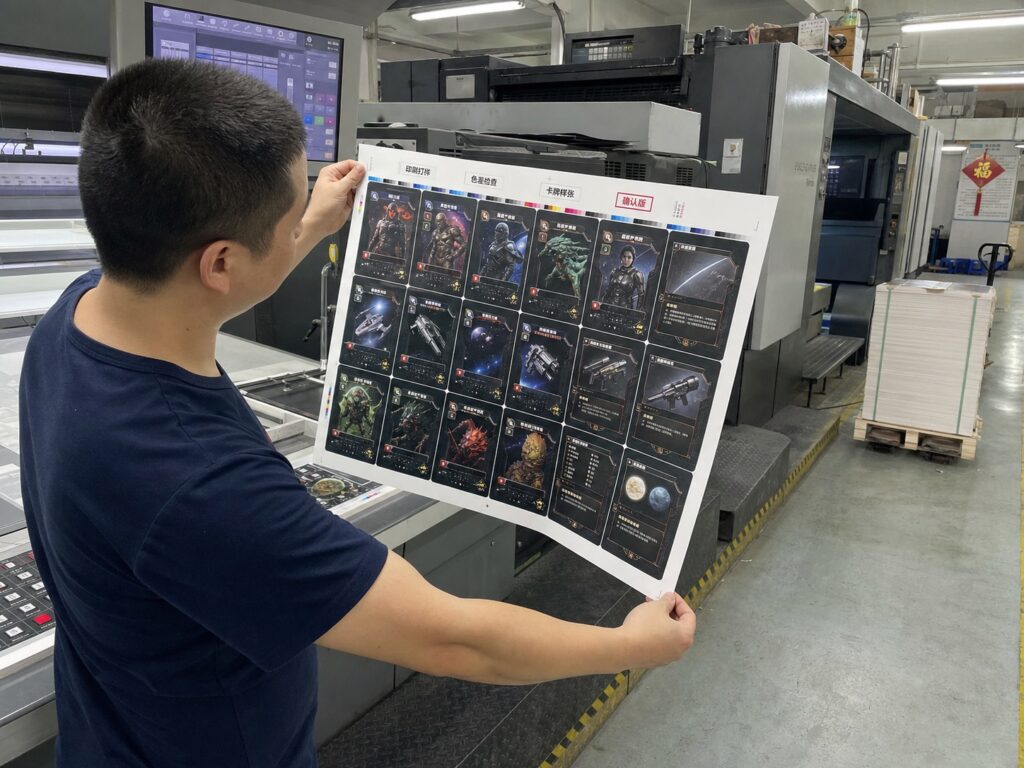
Quality control must match the product. Printed parts may need checks for color, registration, cutting and surface damage. Miniatures require attention to shape, assembly and finish. Inserts must hold the contents correctly, and every box must contain the right number of cards, tokens and accessories.
Ask when inspections occur, how collation is controlled and what reference is used for acceptance. For complex sets, a component checklist and packing sample can reduce missing-part and assembly risks. Our About page provides more information about Niceam Product’s factory and quality approach.
5. Compare cost, MOQ and lead time in context
MOQ, price and production time depend on the game’s specifications, materials, tooling, quantity and finishing processes. A lower unit price may come with different stock, simpler packaging or fewer inspection steps. Compare quotations against the same bill of materials instead of looking only at the final total.
Request a clear breakdown of what is included, such as samples, molds, inserts, assembly, export cartons and shipping terms. Also confirm which milestones start the production schedule, including file approval, deposit, sample confirmation and material availability.
6. Confirm compliance and shipping requirements
Tell the manufacturer where the game will be sold and who will use it. Testing, labeling and documentation requirements vary by market, product type and intended age group. The supplier should be able to discuss suitable materials and coordinate required testing or documentation for the agreed project.
Packaging should also be reviewed for transport. Confirm export carton size, product protection, pallet requirements and delivery terms before production is complete.
7. Assess communication and project control
Custom tabletop games involve many approvals. Look for organized communication, written specifications and clear responsibility for artwork review, sampling, component sourcing, assembly and shipment. A supplier should explain trade-offs in practical language and record approved changes instead of relying on scattered messages.
Questions to ask before choosing a manufacturer
- Can you manufacture and assemble every item in our bill of materials?
- What samples are recommended before mass production?
- How will printed, plastic, wooden and metal parts be inspected?
- What information is included in the quotation and schedule?
- How are file revisions and approved specifications recorded?
Frequently asked questions
Should one manufacturer handle the complete tabletop game?
For a mixed-component project, one coordinating manufacturer can simplify specifications, sampling, assembly and shipment. The important point is whether that partner can manage specialist processes consistently and take responsibility for the complete packed product.
When should a publisher contact a tabletop game manufacturer?
You do not need final artwork to begin a manufacturing discussion. A component list, approximate dimensions, prototype photos, target quantity and destination are enough for an early feasibility review. Final pricing normally requires confirmed specifications and production-ready files.
Niceam Product supports custom tabletop game projects with printing, packaging, books and a wide range of components. Send us your bill of materials and project specifications for an initial manufacturing review and quotation discussion.