
Card Game Printing Guide: Stock, Finish and Packaging
For a publisher, great artwork is only the beginning of a successful card game. The finished product also depends on card stock, surface treatment, cutting accuracy, collation and packaging. These choices affect how the cards shuffle, how long they last and how confidently the game can move from prototype to retail production.
This card game printing guide explains the main specifications to discuss with a manufacturer. It applies to standalone card games, educational decks, tarot and oracle cards, TCG products, expansion decks and card-based tabletop games.
1. Define the card format and deck structure
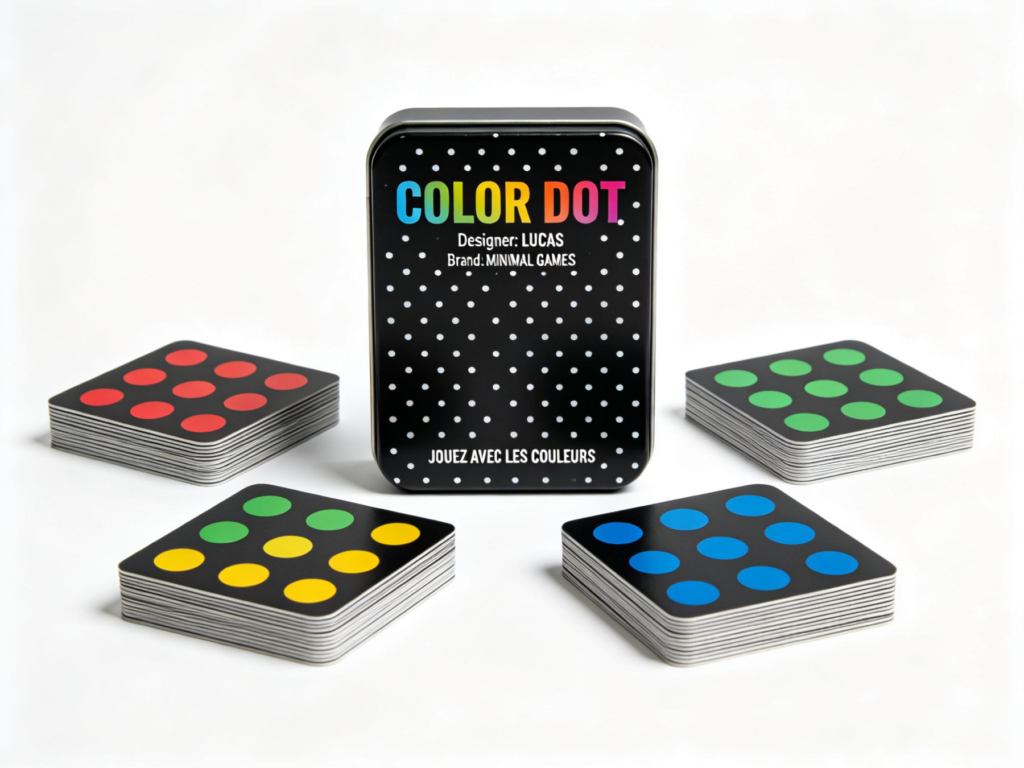
Start with the physical structure of the product. A manufacturer needs the finished card size, number of unique cards, copies of each card, decks per box and required packing order. Common formats include poker, bridge, tarot and mini cards, as well as custom dimensions.
- Confirm the width and height of every card type.
- List unique fronts and shared or unique backs.
- Identify cards requiring foil, holographic film or other special effects.
2. Choose the right card stock
There is no single best stock for every custom card game. The correct option depends on stiffness, opacity, shuffle feel, finish, budget and expected frequency of play.
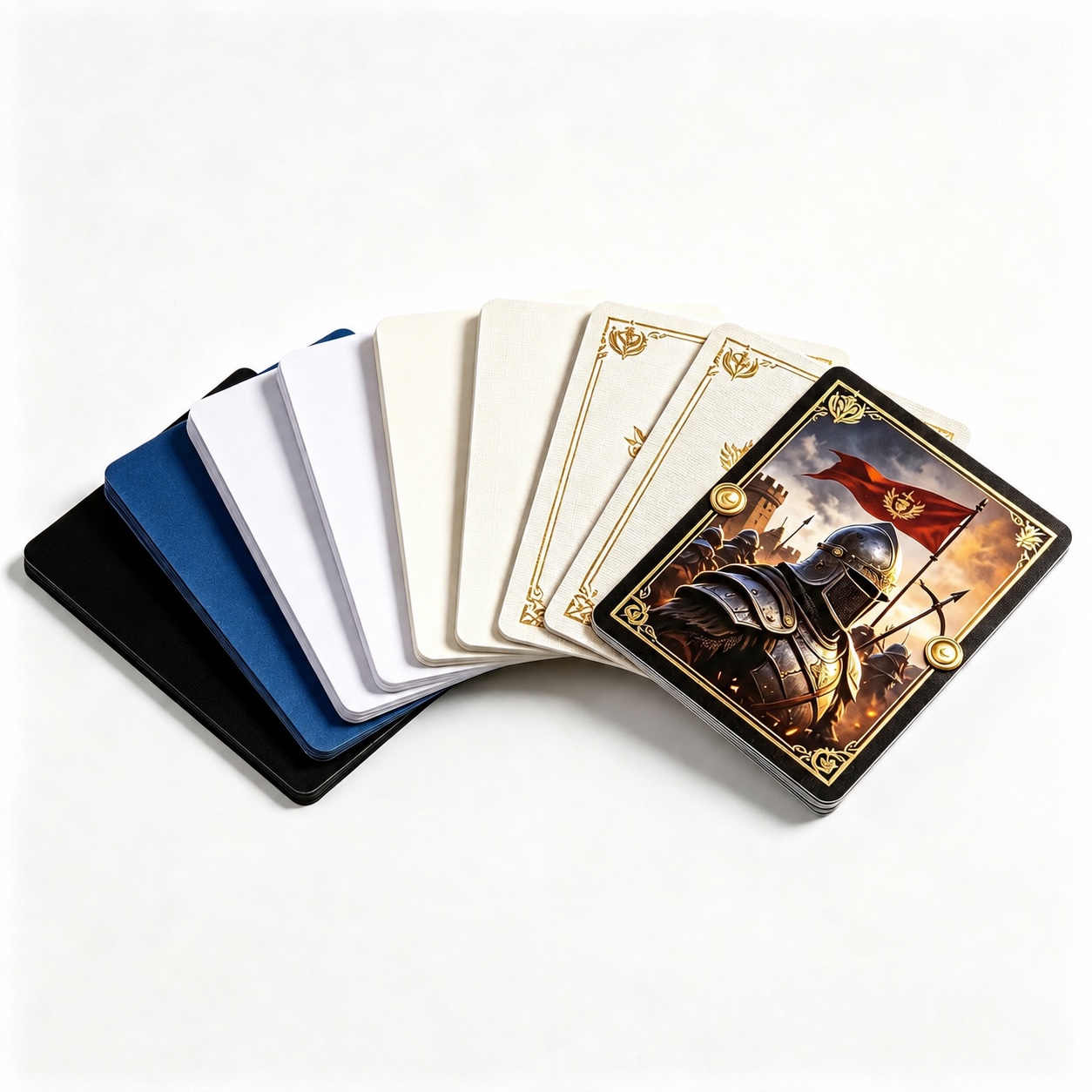
Black-core stock contains a dark inner layer that helps reduce show-through. It is often considered for premium playing cards and competitive decks where opacity matters. Blue-core or grey-core stock can offer a practical balance between performance and cost for many family games, educational products and commercial decks. Coated and specialty papers can create a different texture or visual character, but should be tested for ink behavior and shuffling.
When sustainability is part of the brief, ask about responsibly sourced or recycled paper and read our guide to eco-friendly card game materials.
3. Match the finish to the play experience
The finish changes both appearance and handling. Smooth, linen, matte and gloss options each create a different look and feel. Special effects can also help distinguish premium or collectible cards:
- Foil stamping for logos, borders and limited-edition details.
- Holographic effects for collectible or rare cards.
- Spot UV for localized gloss over a contrasting background.
Plan special finishes early because they affect artwork, sampling and cost. For a TCG, clearly identify which card groups receive each effect and supply the required finishing layers.
4. Prepare print-ready artwork carefully
Use the manufacturer’s current template for the selected card size. Keep text, borders and symbols inside the recommended safe area, and extend backgrounds into the bleed area. Confirm dimensions, orientation, image resolution, fonts and card backs before submitting files. Foil, spot UV, white ink and cut lines should be supplied as clearly named production layers.
A digital proof helps verify content and placement. A physical proof or production sample is more useful when material feel, finish and printed color are important.
5. Select practical packaging
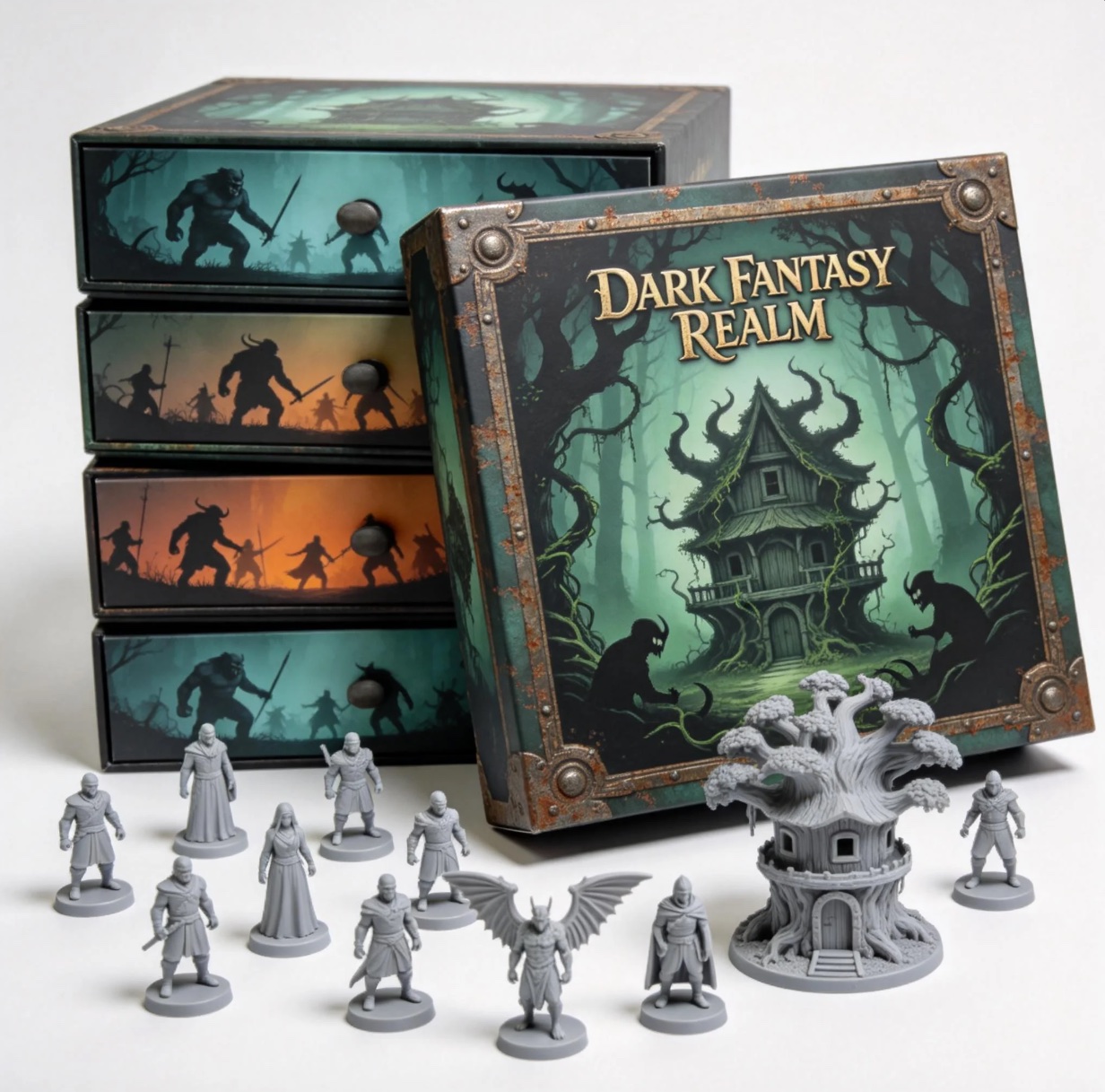
Packaging should protect the cards, communicate the product clearly and fit the intended retail or fulfilment channel. Common options include tuck boxes for compact decks, two-piece rigid boxes for games with mixed components and premium magnetic or book-style boxes. Paperboard or molded inserts can organize decks, rulebooks, tokens and accessories.
Provide the complete component list before finalizing the box. Sleeves, divider cards, books, dice and metal accessories can all change the required internal dimensions and insert structure.
6. Approve samples and quality standards
During sample review, shuffle the cards, inspect edge alignment, compare card backs and test the fit inside the box. Confirm that special finishes align with the artwork and that every deck contains the correct cards in the intended order. A signed sample, collation list and packing diagram give the publisher and manufacturer a shared reference for mass production.
What to include in a quotation request
A clear request allows the manufacturer to recommend suitable materials and compare production options accurately. Reference photos or an existing prototype are helpful, but they should be supported by written specifications so that card counts, component quantities and packaging expectations are not misunderstood.
- Target quantity and destination country.
- Card size, card count and decks per game.
- Preferred stock, finish and special effects.
- Box type and complete component list.
- Artwork status, sample needs and delivery target.
Frequently asked questions
Which card stock is best for a custom card game?
The answer depends on opacity, stiffness, shuffle feel, finish and budget. Compare physical samples rather than choosing by paper name alone.
Can one deck contain several finishes?
Yes. Selected collectible cards can receive foil or holographic effects while standard cards use the base finish. Each group must be clearly identified in the specification.
Can cards be packed with other game components?
Yes. Decks can be assembled with rulebooks, boards, tokens, dice, miniatures, metal accessories and custom inserts.
Niceam Product supports custom card game, TCG, board game and tabletop game projects with printing, packaging, books and mixed components. Explore our manufacturing capabilities or send your specifications for a project review.