
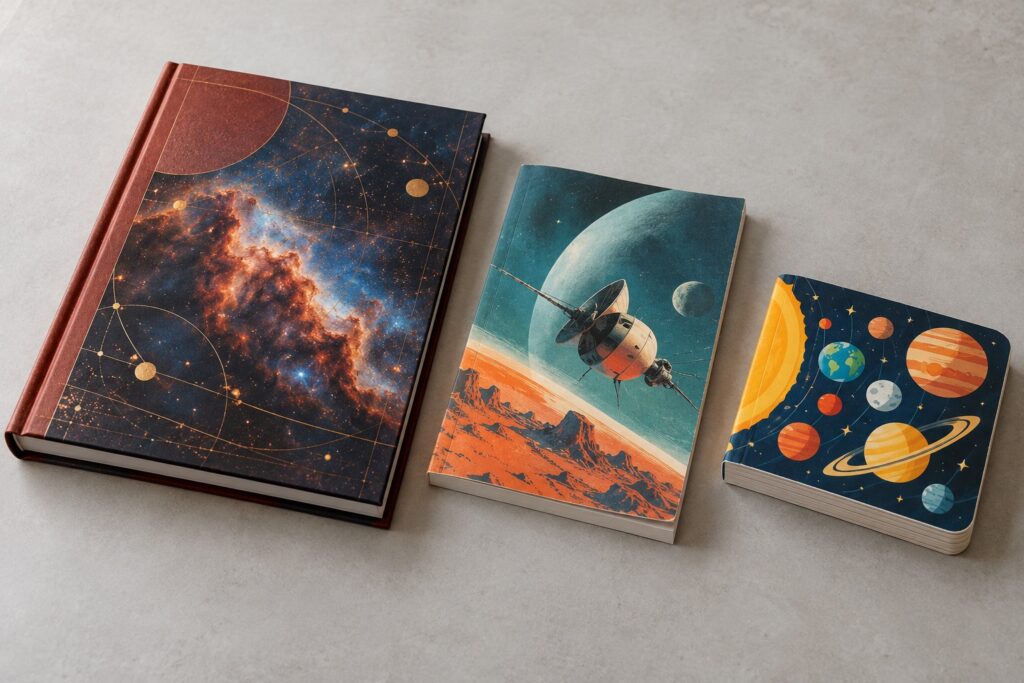
Hardcover, Paperback or Board Book? Choosing the Right Construction for Your Project
The right book format depends on who will use it, how often it will be handled and whether it must fit inside another product. For publishers and tabletop game creators, hardcover, paperback and board book printing are three different construction decisions, not simply three price points.
Hardcover: a rigid case, not rigid pages
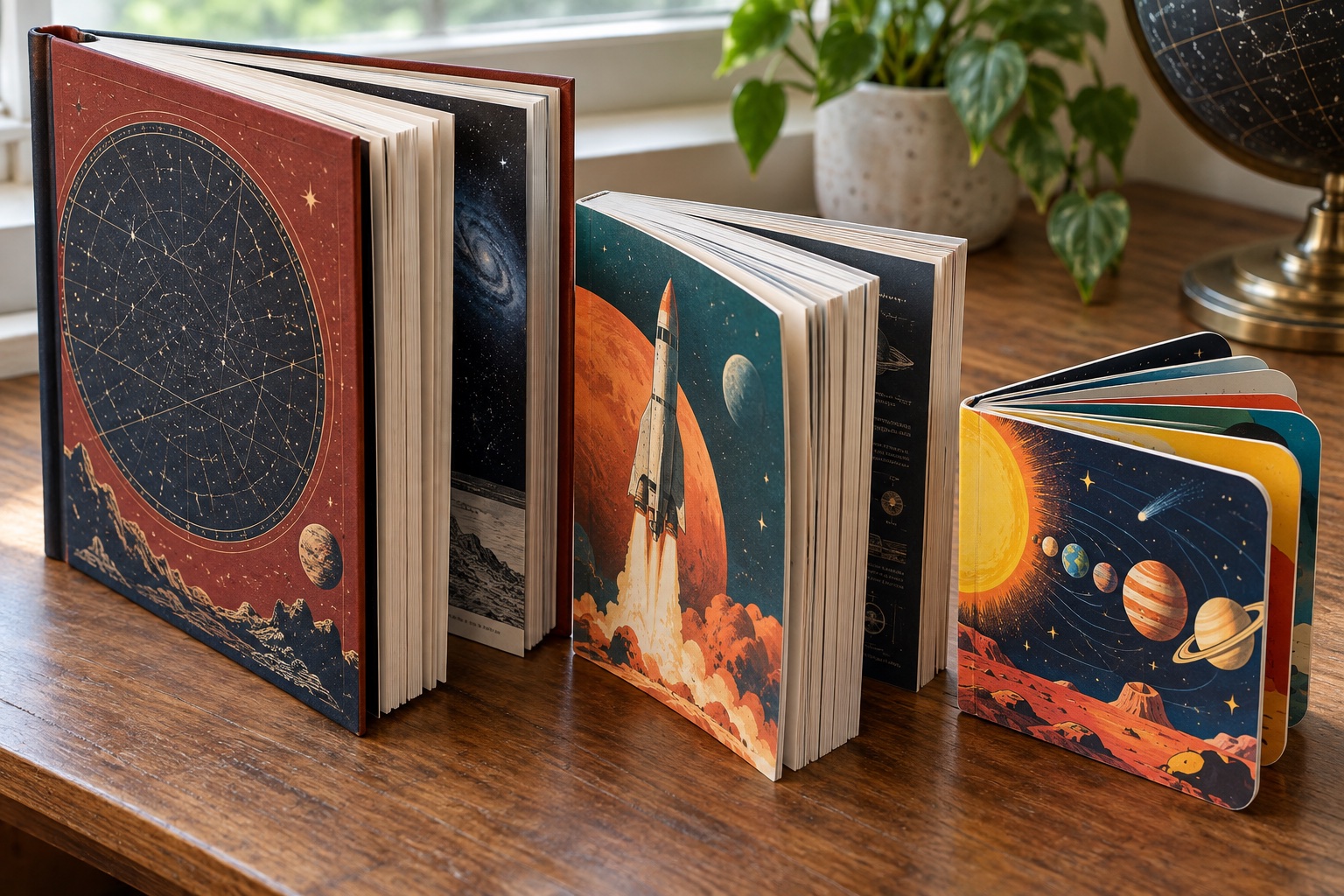
A hardcover book has a firm outer case around a separate paper text block. The interior pages are still ordinary flexible sheets. This format can suit illustrated art books, collector’s editions, reference volumes and premium TTRPG sourcebooks where the cover needs a substantial feel. Options may include a printed case, jacket, cloth-like material or specialty finish, depending on the project and production route.
Do not choose hardcover on appearance alone. The board thickness, interior stock, binding method and book size change its weight, opening behavior and cost. A thick tabletop RPG campaign book intended to be used at the table needs a physical sample so you can test the gutter, page-turning and spine after repeated opening. If it belongs in a game box, check its actual finished dimensions against the insert.
Paperback: lighter and easier to pack
A paperback or softcover book has a flexible cover around a paper text block. Perfect binding is a common option for a substantial paperback, but the correct binding depends on page count, paper and how the book will be used. For a short board game rulebook, a saddle-stitched booklet or folded rulesheet may be more appropriate than a perfect-bound paperback.
Softcover construction often helps when shipping weight and retail-box space matter. It can work for novels, field guides, game manuals and standard-edition rulebooks. Specify the cover stock and finish separately from the interior paper. Before approving production, check whether the spine remains sound, the pages open comfortably and diagrams near the gutter are still readable.
Board book: the pages themselves are board
A children’s board book is not a small hardcover. Its leaves are thick, rigid laminated paperboard; there is no separate block of thin paper pages in the usual sense. This makes the pages easier for small hands to turn and more resistant to bending. Rounded corners and wipeable finishes are common considerations, but the exact construction and destination-market requirements must be confirmed for each project.
Board book printing is often relevant to early-learning titles, simple visual stories and interactive formats designed around a small number of sturdy leaves. Each thick leaf affects the closed book’s depth and the turning radius. Ask for a physical dummy or pre-production sample to test page alignment, corner shape, lamination, opening and repeated handling. Do not assume that a hardcover picture-book file can be moved into a board-book template unchanged.
What changes the quote most?
To compare hardcover vs paperback vs board book printing fairly, keep the content and intended quantity clear, then ask suppliers to identify which specifications differ. The format changes more than the cover:
- Trim size and page count: larger pages use more material, while the same story may need a different layout on thick board leaves.
- Paper and board: interior stock, cover board, lamination and finish affect thickness, weight and print feel.
- Binding and finishing: sewing, gluing, case-making, die-cutting and special finishes have different production steps.
- Packing: individual protection, slipcases, fitted inserts and export cartons belong in the quote, not as late assumptions.
A sensible request gives the manufacturer one preferred construction and one alternative, with the same artwork status, quantities and delivery basis. The earlier custom book printing quote checklist sets out the full information to send.
Choosing a format for a board game or TTRPG set
For a custom board game, the book is one part of the bill of materials. A standard edition might use a compact softcover rulebook, while a collector’s edition could add a hardcover lore volume. A children’s educational tabletop game may call for a separate board book, but only when thick, durable pages serve the actual play experience. The format should follow the audience and use case, not a generic upgrade ladder.
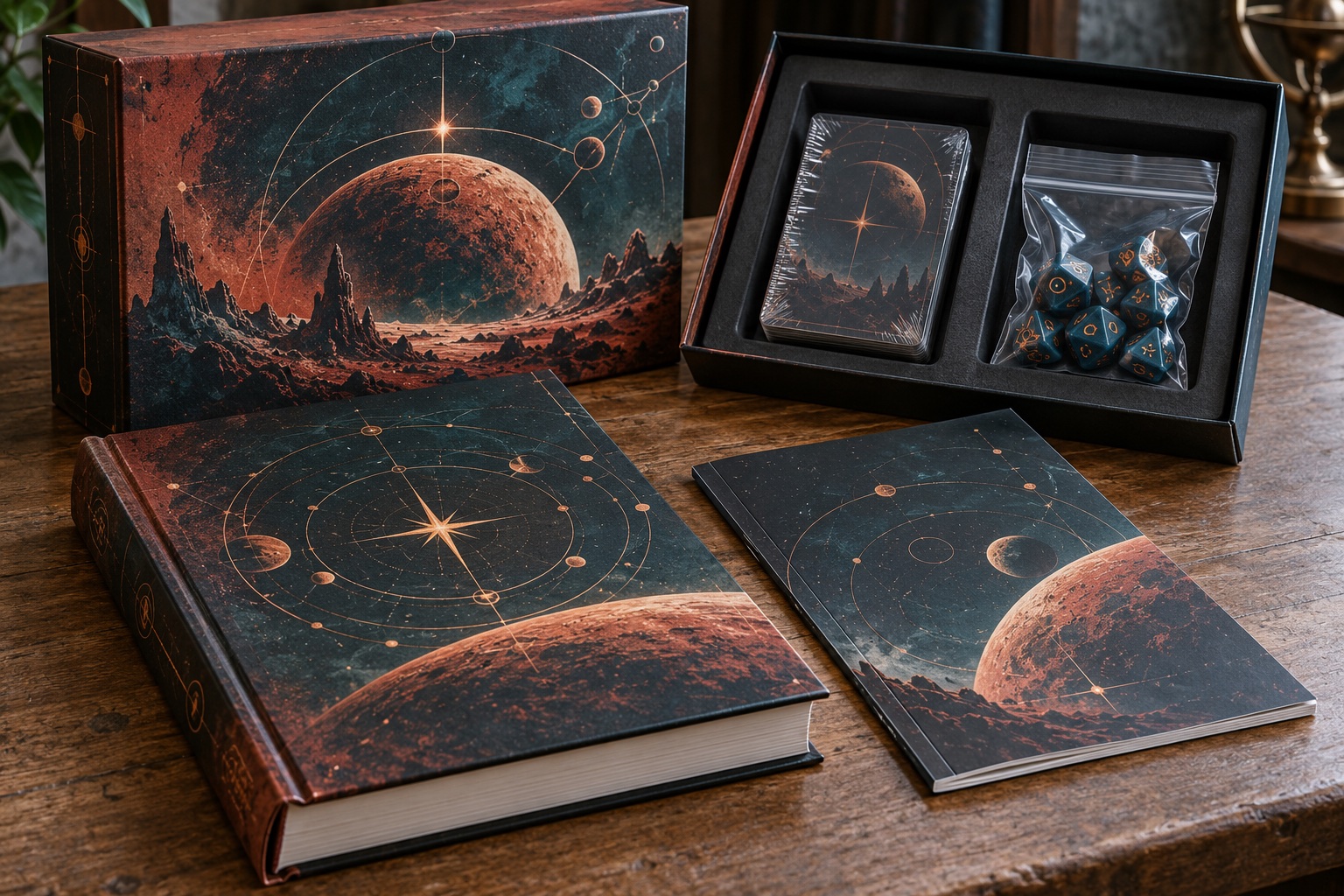
Ask a tabletop game manufacturer to review the book together with cards, dice, box and insert. The chosen binding changes the book’s thickness and therefore the tray cavity, box depth and freight weight. For each edition, define which book goes in the box, how it is protected and whether other components are assembled into a retail-ready set.
Approve the physical result
Before mass production, compare the sample with your agreed specification. Check color, trim, page order, cover finish, spine strength and how the book opens. For board books, also test corners and page edges; for a boxed game, check the fit with all other packed components. A digital proof can confirm content, but it cannot replace these physical checks.
Discuss your book project
Send Niceam Product your format, size, page count, paper preference, quantities, artwork status and destination. If the title is part of a board game or TTRPG product, include the full component list and packing plan. Share the brief for a project-specific production review.