
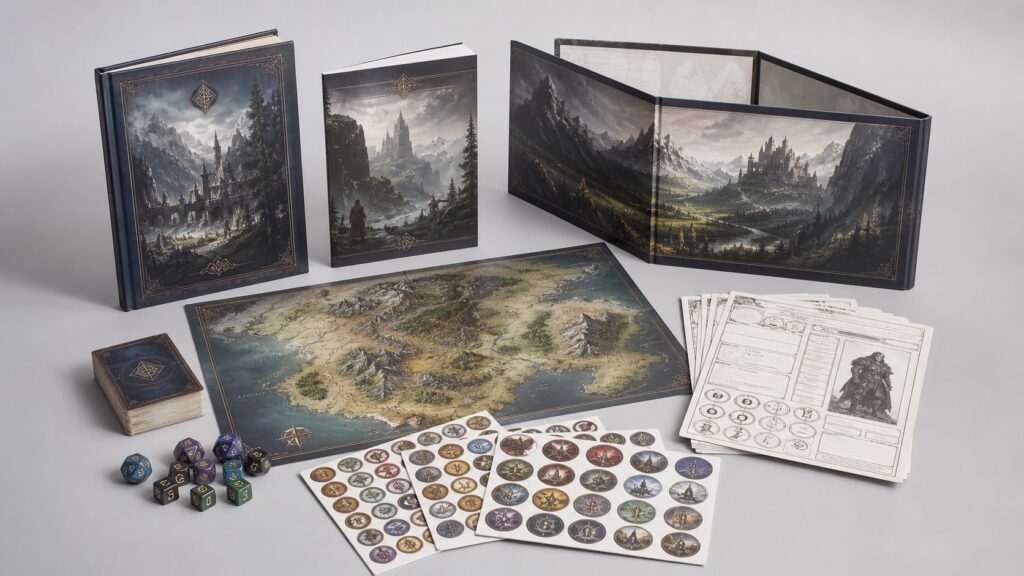
A tabletop roleplaying game is rarely just one book. A complete project may combine a core rulebook, campaign book, quick-start booklet, game master screen, maps, character sheets, reference cards and punchboard tokens. Because these pieces use different materials and production methods, publishers need to plan them as one coordinated product.
This TTRPG book printing guide explains the main decisions to prepare before requesting a quotation. Clear specifications help a manufacturer recommend practical materials, identify production risks and keep every printed component consistent.
1. Define every book and printed component
Begin with a bill of materials that lists the finished size, page count, binding, color requirement and quantity for each item. Separate the core rulebook from campaign books, player guides and short introductory booklets. A 250-page rulebook has different binding requirements from a 24-page quick-start guide, even when they share the same artwork style.
Also list loose components such as maps, character sheets, cards, stickers, envelopes and tokens. If the products will be packed in a slipcase, rigid box or complete game box, provide the intended packing order. The final package dimensions should be based on production-equivalent samples rather than estimates from digital files.
2. Select binding and paper for the way the book will be used
Hardcover binding suits substantial rulebooks and premium editions because the rigid cover protects the pages and creates a strong shelf presence. Sewn sections can improve opening performance and durability for frequently referenced books. Perfect-bound softcovers are lighter and may suit campaign books, supplements and cost-sensitive editions. Saddle stitching is generally more appropriate for slim booklets with a limited page count.
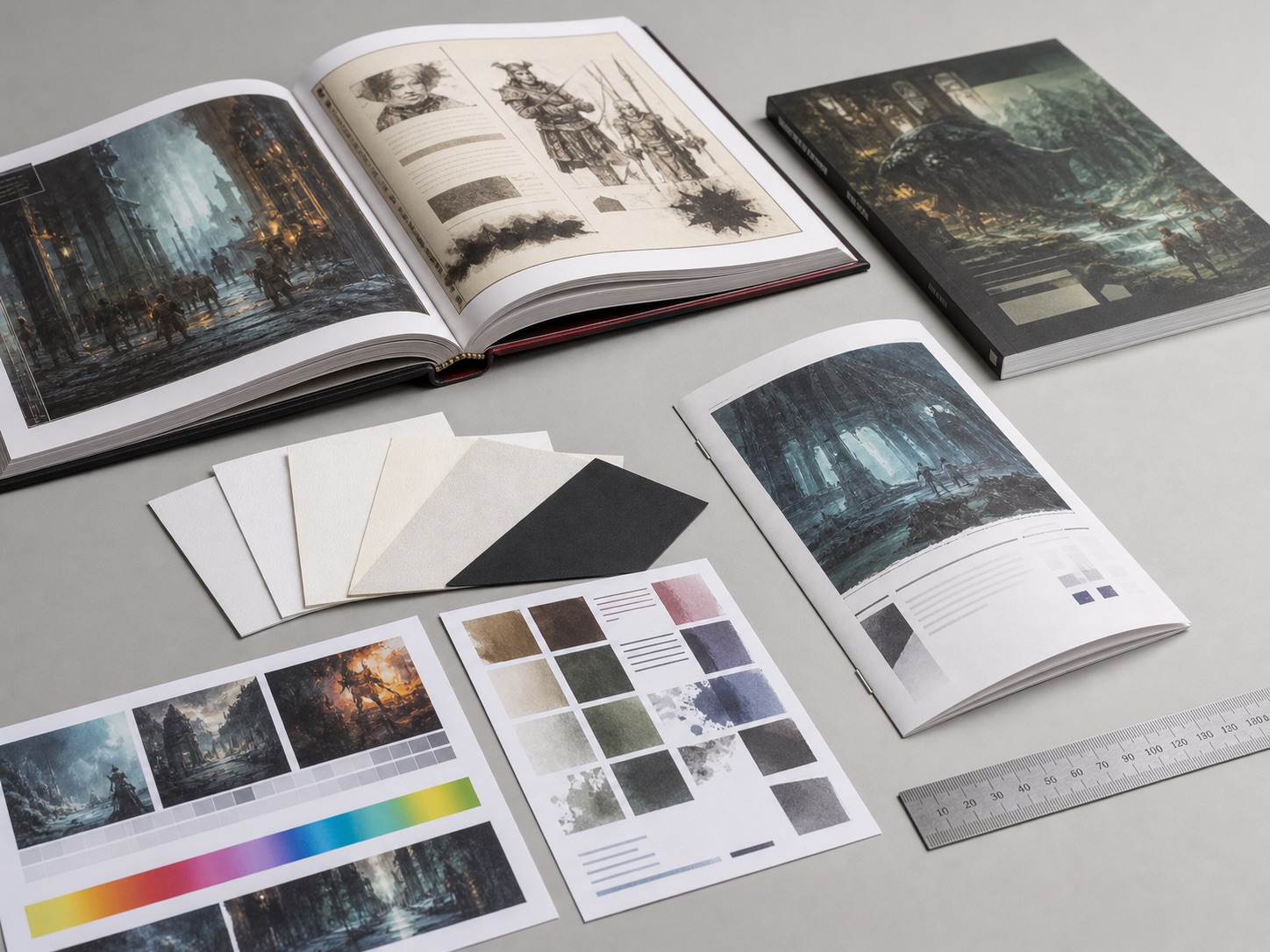
Paper choice affects image reproduction, readability, page thickness and total book weight. Coated paper can produce vivid illustrations, while uncoated paper offers a softer reading surface and is often easier to write on. High opacity is valuable when pages contain dense text, maps or dark artwork. Ask the manufacturer to calculate the spine from the confirmed paper and page count before finalizing the cover file.
3. Prepare color, bleed and readable page layouts
Production files should follow the supplied trim size, bleed and safe-area specifications. Images normally need suitable print resolution, and fonts should be embedded or converted according to the printer’s requirements. Keep page numbers, headings and important rules away from trim and binding areas. Maps that cross a spread need extra attention near the gutter so critical information is not difficult to see.
Export the interior as ordered pages, not printer spreads, unless the manufacturer requests another format. Supply the cover separately using the final spine width. If a project contains several languages, use clear filenames and provide a version table showing which cover, interior and player aids belong together.
4. Plan maps, GM screens and player aids separately
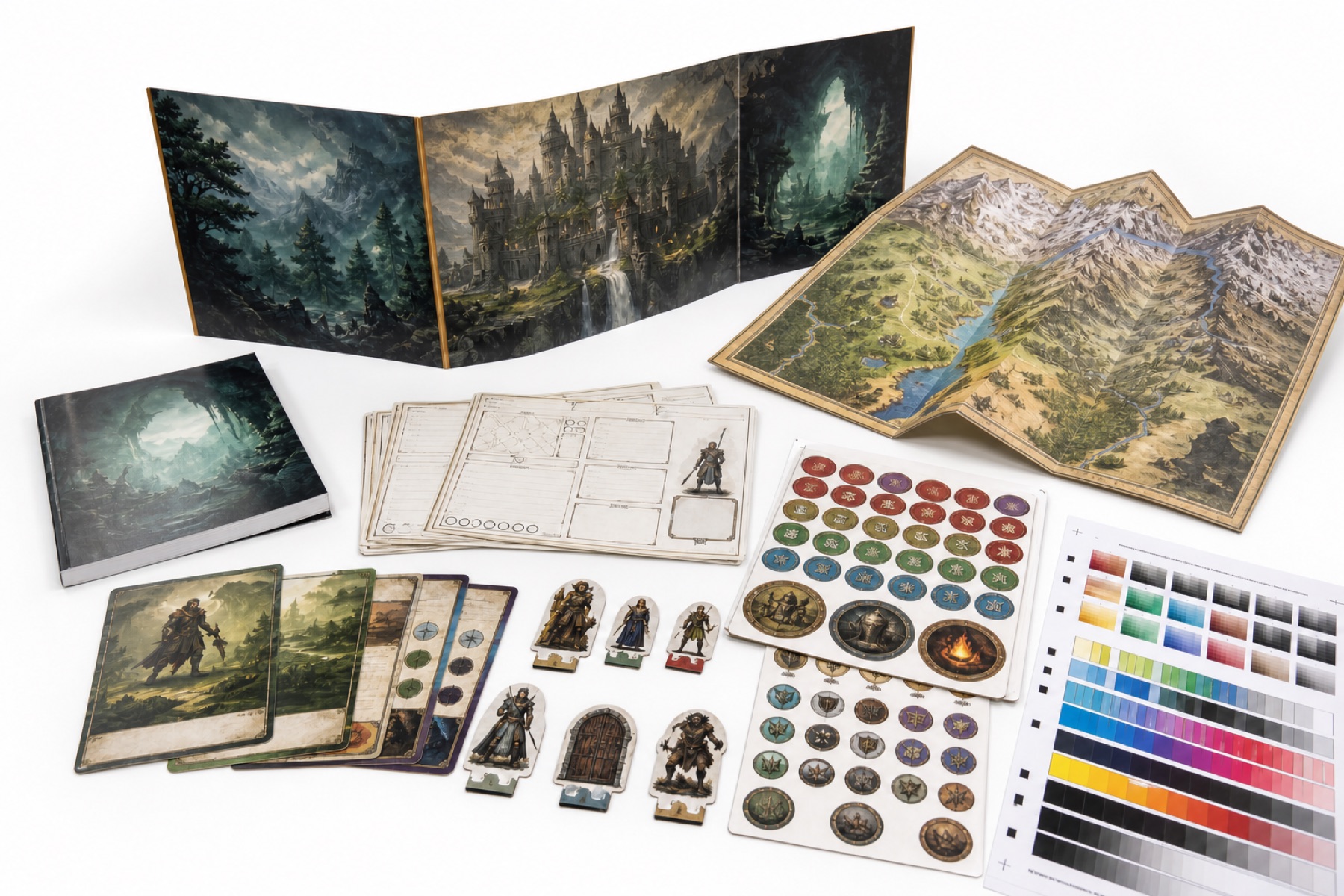
Large maps must be checked for finished size, fold sequence, paper strength and coating. Repeated folding can damage heavy ink coverage if the material and scoring are unsuitable. Character sheets may need an uncoated surface for pencils and erasers. Reference cards require consistent cutting and corner rounding, while punchboard tokens need suitable board thickness, die-cut alignment and easy removal.
A GM screen combines printed wrap, rigid board and hinges. Confirm the number of panels, portrait or landscape orientation, viewing direction and folded size. When books and player aids are packed together, test the actual stack to prevent movement, bent corners and an oversized box. Niceam Product’s custom game manufacturing capabilities cover books, printed components, packaging and coordinated assembly.
5. Use proofs to check more than spelling
A digital proof is useful for checking content, page order, margins and basic placement. A physical proof provides better information about book size, paper feel, binding, color and the relationship between components. Review small tables, rule references, map labels and dark illustrations under normal lighting. For a boxed set, confirm that books, screens, cards and tokens fit the proposed insert and outer packaging.
Record approved materials and revisions before production. Quality checks should cover page sequence, trimming, spine alignment, binding strength, surface damage, folding and component counts. Our factory and quality overview explains how production capabilities and inspection support mixed-component projects.
6. Prepare a useful TTRPG printing quotation request
For each item, provide the finished size, page count, color specification, binding, preferred paper, surface finish and order quantity. Include packaging requirements, destination country and target schedule. If artwork is not complete, reference files and a detailed component list can support an initial review, but final pricing depends on confirmed specifications and production-ready files.
MOQ, unit cost and lead time vary with materials, page counts, finishing, quantities and assembly requirements. Compare suppliers using the same bill of materials instead of comparing totals built from different assumptions.
Frequently asked questions
Can one manufacturer produce the books and player aids?
Yes. A coordinated manufacturer can manage rulebooks, campaign books, maps, cards, punchboard pieces, screens and packaging. Confirm which processes are handled and how the complete packed set will be inspected.
When should a physical proof be ordered?
Order one after the main dimensions, materials and files are sufficiently stable to evaluate. Complex bindings, dark artwork, folding components and fitted packaging benefit most from physical checking.
Niceam Product supports custom TTRPG book printing and mixed-component manufacturing. Send us your book specifications, component list and target quantity for an initial production review.