Board Game Assembly and Kitting: From Components to Retail-Ready Sets
Printing the cards, boards and box is only part of manufacturing a game. A publisher needs every deck, rulebook, punchboard and accessory in the correct edition, counted and protected inside a finished retail pack. Board game assembly and kitting is the step that turns separately made components into a product a customer can open, play and stock on a store shelf.
For a mixed-material tabletop game, that final step needs its own specification. Here is how to plan a cleaner handoff from components to complete sets.
What assembly and kitting include
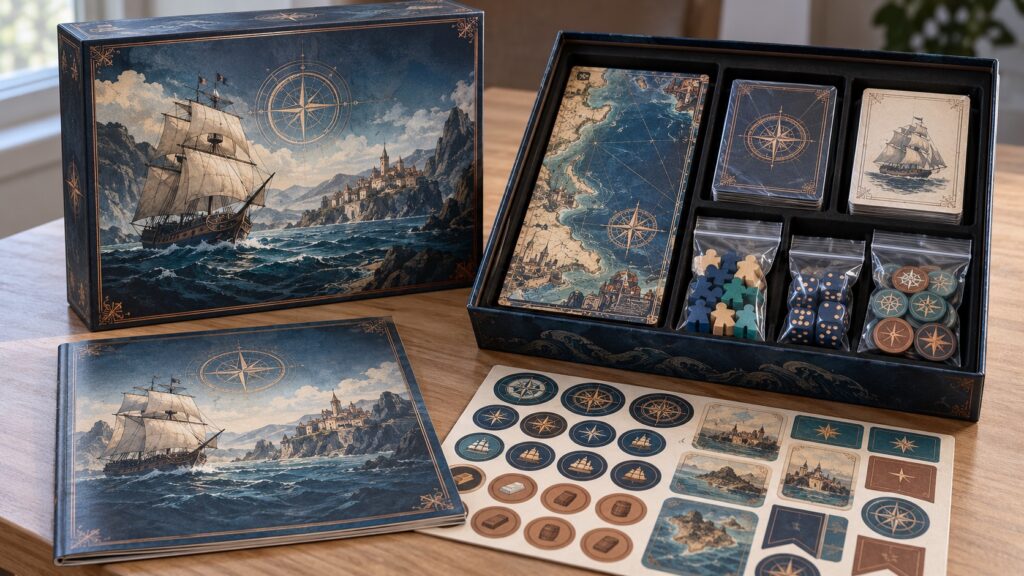
Kitting means preparing and grouping the specified components for each copy of a game. Assembly then places those groups, printed parts and accessories into the agreed box or other retail package. Depending on the project, the work can also include card collation, protective bagging, fitted inserts, retail wrapping, labels, final inspection and export-carton packing.
Some parts may come from different processes or specialist suppliers. The publisher should still have one approved component list and one accountable lead partner for the final set. Niceam Product can coordinate printed parts, sourced accessories, packing and quality checks as part of custom board game manufacturing.
Build a per-game BOM and packout sheet
The bill of materials (BOM) should state the quantity per retail unit, not just the total ordered from each supplier. Give every item a distinct name or part number, finished size, artwork version and packing state. A packout sheet adds the information the assembly team needs: which items are sealed together, where each group sits in the insert and what goes on top before the lid closes.
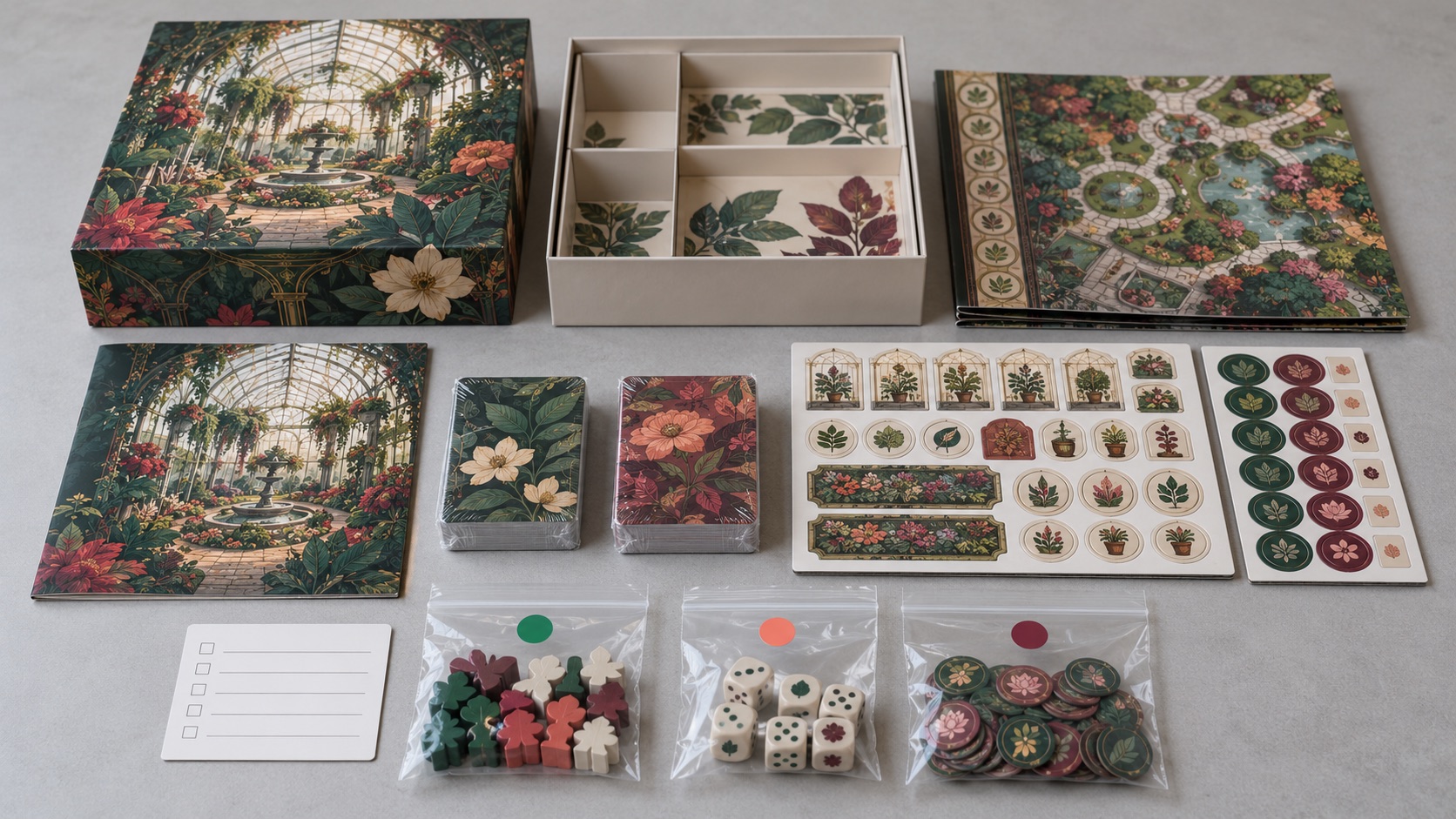
For example, a hypothetical game might contain two wrapped decks, one folded board, two punchboard sheets, one rulebook, a bag of 12 wooden pieces and a separate bag of four dice. If a deluxe edition adds metal coins, give it a separate version of the packout sheet. Do not rely on a general note such as “include all accessories” to distinguish editions.
The BOM, rulebook contents list, box copy and approved physical sample should agree, especially with several languages, expansion packs or retailer-specific bundles. Our board game components guide covers individual parts; the packout sheet defines how they become one saleable unit.
Prepare components before they enter the box
Printed and loose items need different handling. Card decks can be collated in the required order and wrapped in tight, close-fitting shrink film when the unopened product specification calls for sealed decks. Punchboard sheets should stay flat and be counted as sheets, not as loose tokens. Folded boards and rulebooks need an orientation that avoids pressure on corners or bindings.
Loose wooden meeples, dice and round tokens are normally counted into separate clear PE zip bags before being placed in the insert. That keeps small pieces together and prevents them from moving through the box in transit. Metal coins, enamel pieces or acrylic standees may need their own bags, sleeves or protected compartments so harder edges do not scuff printed surfaces. The right treatment depends on the approved sample, not on a generic packing photo.
Approve a complete packout, not only separate samples
Before mass assembly, review a complete set made from the intended components and packaging. Check whether the insert holds every group, the rulebook lies flat, the lid closes without force and the contents remain controlled when the box is handled. Open it as a customer would: are the components easy to identify and remove, and does the presentation match the artwork and retail promise?
Record the approved packing order with photographs or a simple diagram. This becomes the reference for the line and for inspection. If a late change adds a thicker card deck or a different bag, recheck the insert and box fit rather than assuming the earlier approval still applies. For box and insert choices, see our board game packaging guide.
Control the assembly line and verify finished sets
A practical assembly plan stages the correct component version before packing begins, separates editions and confirms counts at sensible checkpoints. Checks can include incoming component condition, quantities inside prepacked bags, the sequence of items placed in the box and the appearance of completed units. A final inspection should compare selected finished sets with the approved sample and packout sheet.
Weight checks may help flag an unusual box, but they cannot replace a physical contents check: two different components can have similar weights. Any shortage, damaged item or edition mismatch needs a clear hold-and-correct process before the unit is sealed. The inspection scope and sampling method should be agreed for the project rather than implied by a blanket “100% perfect” claim.
Make the set retail- and shipment-ready
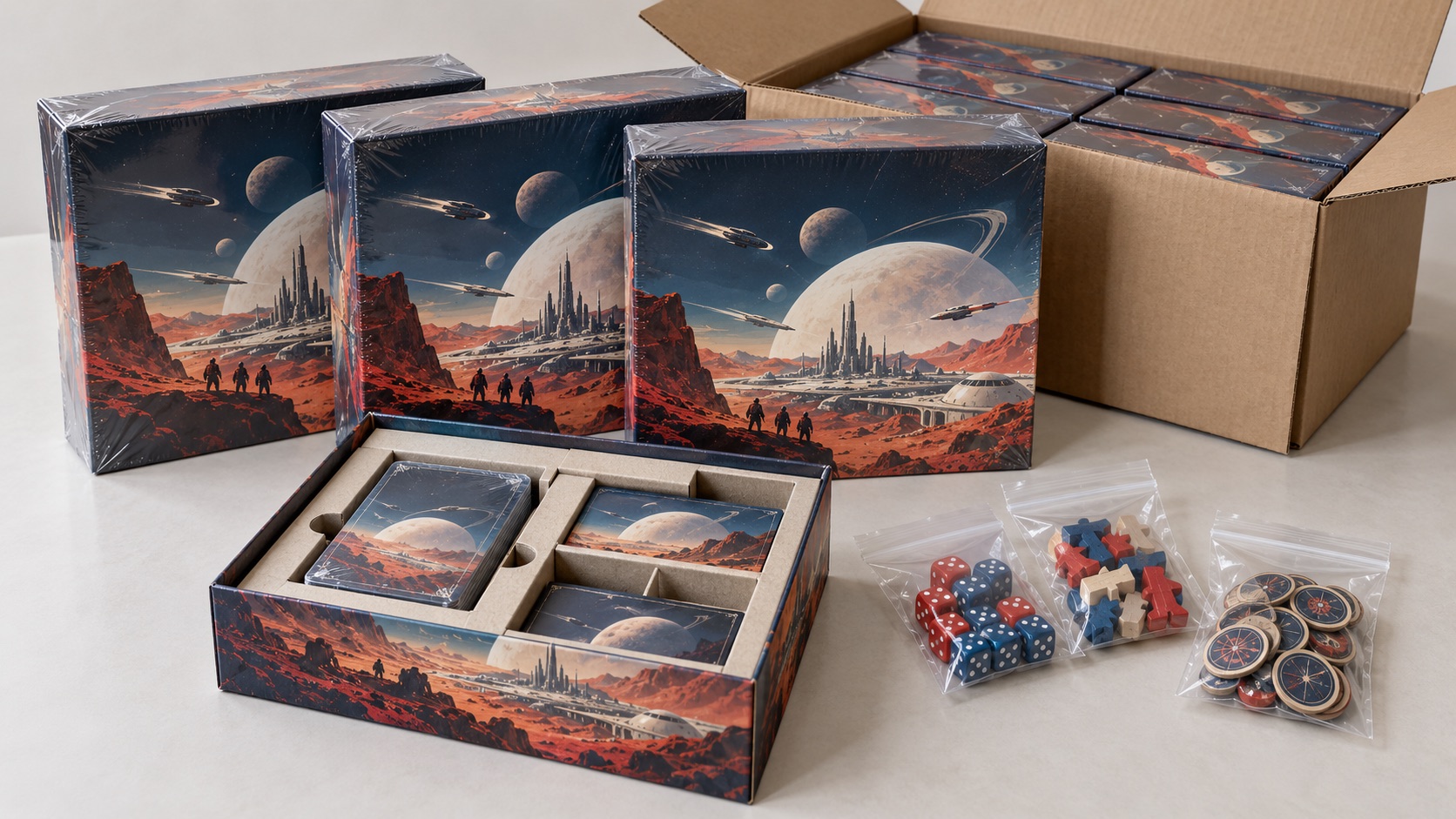
After packout approval and inspection, the finished game may receive an outer shrink wrap or other agreed seal, a barcode or market-specific label, and then a protective export carton. Carton quantity, dimensions, weight and markings should match the shipping plan. A good retail-ready set is not merely full: it has the correct contents, presentation and protection through the next handoff.
To discuss board game assembly services or tabletop game kitting, send Niceam Product your per-game BOM, artwork/version list, target quantity, component or sample photos, preferred bagging and insert layout, retail-label requirements and destination market. We can review what is ready for assembly and identify the decisions still needed for a dependable quote. Tell us about your project.