
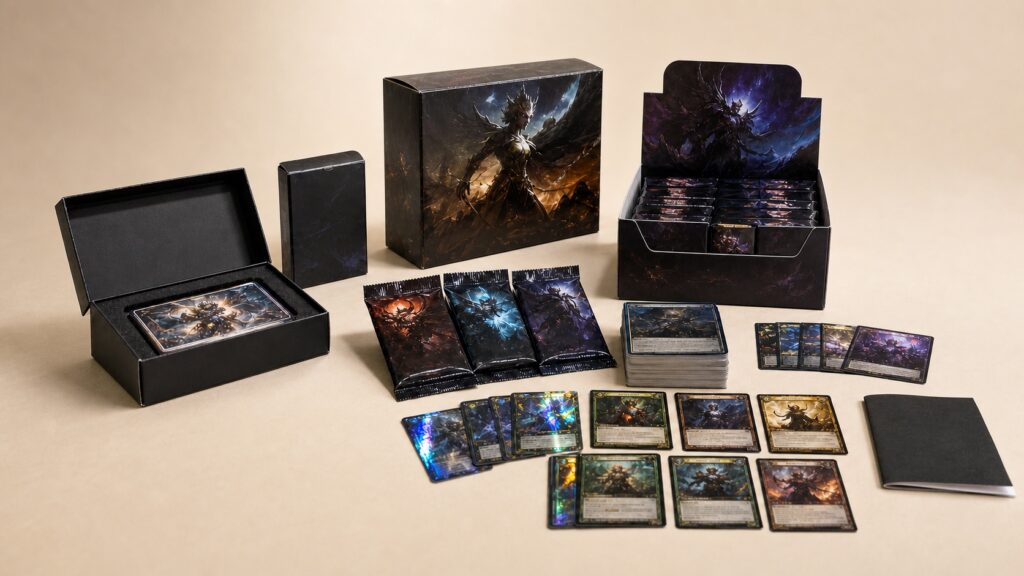
Turning a trading card game into a retail-ready product involves more than printing a stack of cards. A TCG project may include several card groups, different rarity levels, foil or holographic finishes, booster packs, tuck boxes, starter sets and display packaging. Every item must match the approved files and arrive in the correct quantity.
A reliable custom TCG card manufacturing process connects artwork preparation, material selection, proofing, collation, packaging and quality control. The steps below help publishers prepare a clearer production brief and compare manufacturers on more than unit price.
1. Start with clear card files and specifications
Before requesting production, separate card artwork into clearly named groups and confirm the number of unique designs, copies of each design and total cards per product. Front and back files must use the same finished size, bleed, safe area and corner-radius requirements supplied by the manufacturer.
Provide a component list alongside the artwork. It should identify card quantities, packaging types, inserts, booklets, tokens and any promotional cards. If the product includes multiple languages or regional versions, show exactly which files belong together. Good file organization reduces assumptions during quotation and prepress review.
2. Choose card stock and finishes for the intended use
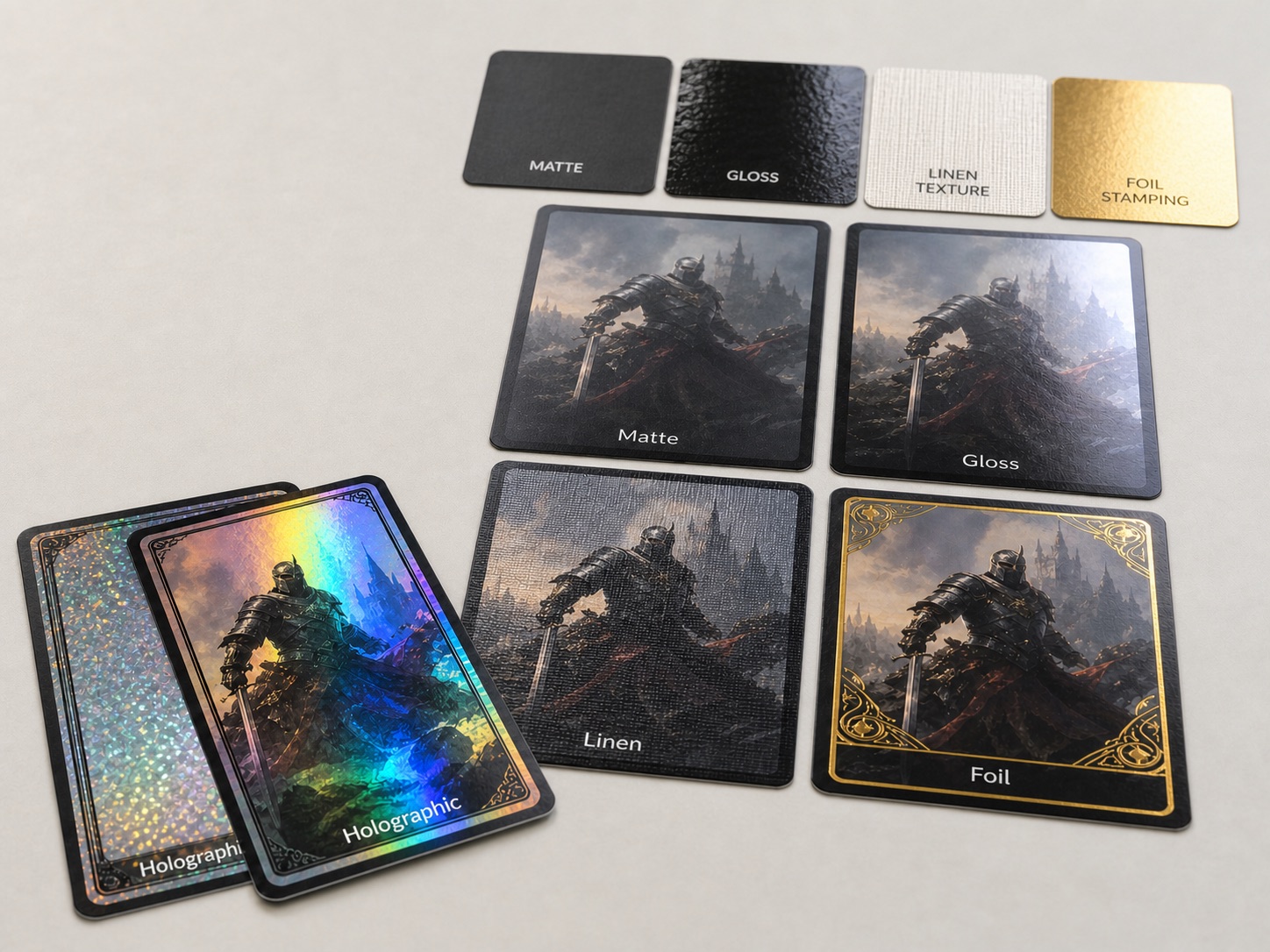
Card stock affects handling, opacity, stiffness and durability. Black-core and blue-core stocks are common options, but the best choice depends on the game, target market and budget. Surface treatments may include matte or gloss varnish, lamination, linen texture, foil or holographic effects.
Special finishes should support the visual hierarchy of the set rather than make every card identical. Publishers can use them for rare cards, promotional editions or selected graphic areas. Our card game printing guide explains the main stock, finish and packaging choices in more detail.
3. Use proofs to control color, text and alignment
A digital proof helps confirm content, page order and placement, while a physical proof provides a better reference for card feel, cutting and finishing. Critical colors and special effects may require additional checks because monitors, proofing devices and production presses do not reproduce every color in exactly the same way.
Review small text, symbols, borders and card backs carefully. Record approved specifications and revisions so the factory and publisher are working from the same files before mass production begins.
4. Plan collation and rarity before production
Collation is one of the main differences between a fixed card game and a trading card game. A starter deck may use a fixed card list, while a booster product may require controlled combinations from several rarity groups. The publisher should supply a written collation table showing each group, required frequency and pack structure.
Confirm how cards will be counted, sorted and verified, especially when foil cards, promotional cards or regional variants are involved. A sample pack and an approved packing instruction can help prevent missing cards, incorrect combinations and confusion during assembly.
5. Design packaging around the sales format
TCG packaging may include booster wrappers, tuck boxes, rigid starter boxes, display cartons and master shipping cartons. The structure should protect card edges, present the product clearly and fit the intended retail or fulfillment channel. Inserts, trays and internal dimensions should be tested with the actual card stack before approval.
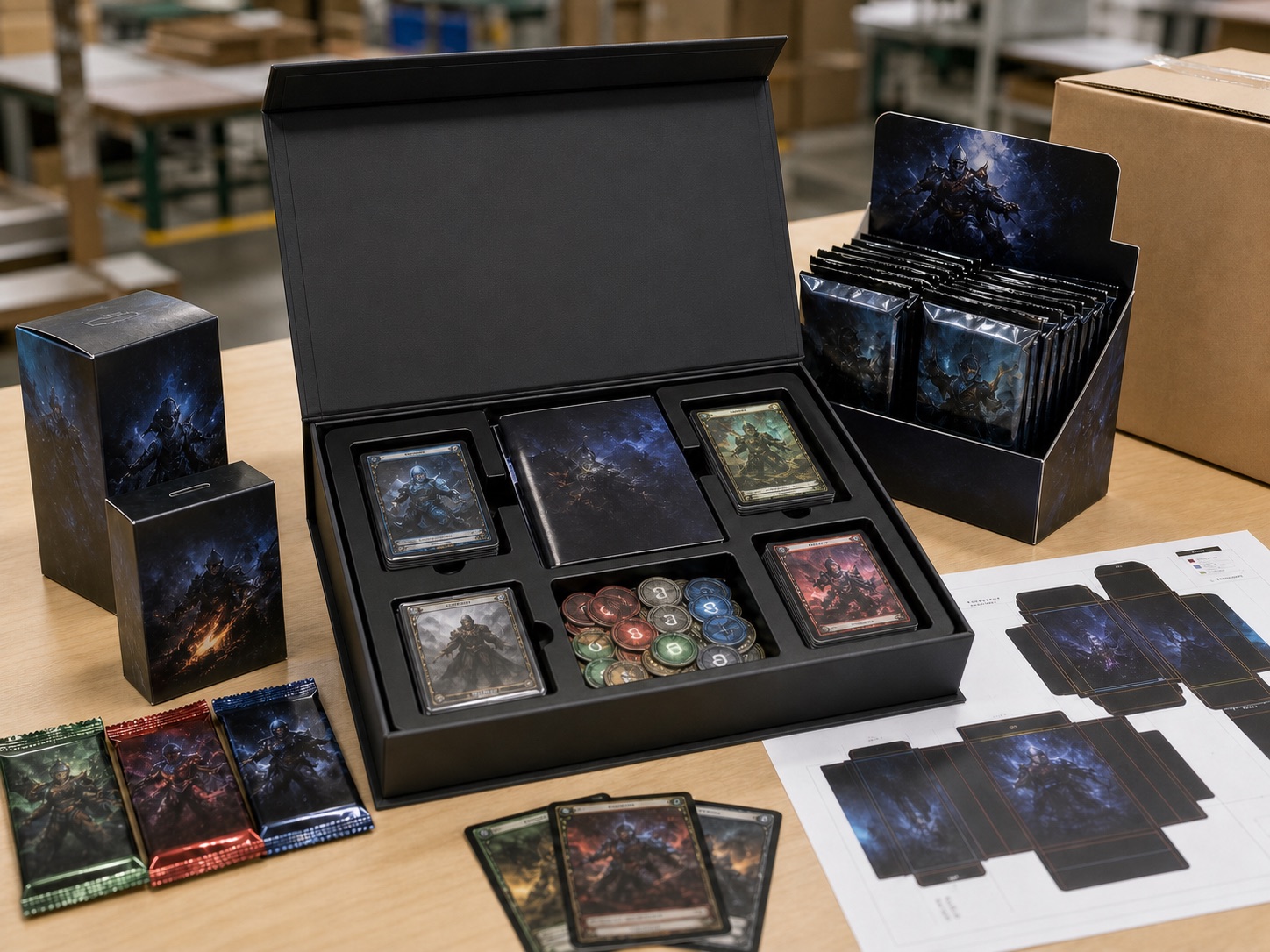
Retail information such as barcodes, warnings, age guidance and regional labeling should be confirmed before printing. Shipping cartons also need suitable protection and dimensions so attractive packaging is not damaged in transit.
6. Apply quality control to cards, packs and boxes
Quality control for custom TCG card manufacturing should cover print registration, color consistency, card dimensions, corner cutting, surface condition and card-back alignment. Packaging checks should include pack seals, box construction, component counts and the correct combination of cards and inserts.
Inspection standards must reflect the agreed product and finish. Ask when checks occur, what approved reference is used and how collation records are maintained. Niceam Product’s factory and quality overview provides more information about our production approach.
7. Prepare the information needed for a useful quotation
A manufacturer can provide a more meaningful quotation when the production brief includes:
- finished card size, unique designs and quantity of each card;
- preferred stock, surface finish and special-effect requirements;
- starter deck, booster pack or fixed-set collation instructions;
- packaging structure, inserts and retail display requirements;
- total order quantity, destination country and requested schedule.
MOQ, cost and lead time depend on specifications, quantity, materials, finishing, collation and packaging. Compare quotations against the same component list instead of judging only the final unit price.
Frequently asked questions
Can a manufacturer quote before all TCG artwork is finished?
Yes. A preliminary review can begin with card counts, approximate specifications, packaging references and target quantity. Final pricing normally requires confirmed materials, dimensions, finishes and production-ready files.
Can one supplier produce cards and complete retail packaging?
A coordinated manufacturer can manage cards, printed packaging, booklets, inserts and assembly as one project. The supplier should explain which processes are involved and how the complete packed product will be inspected.
Niceam Product supports custom TCG card printing, packaging and mixed-component production. Explore our custom game manufacturing capabilities, then send us your card list, specifications and target quantity for an initial manufacturing review.