
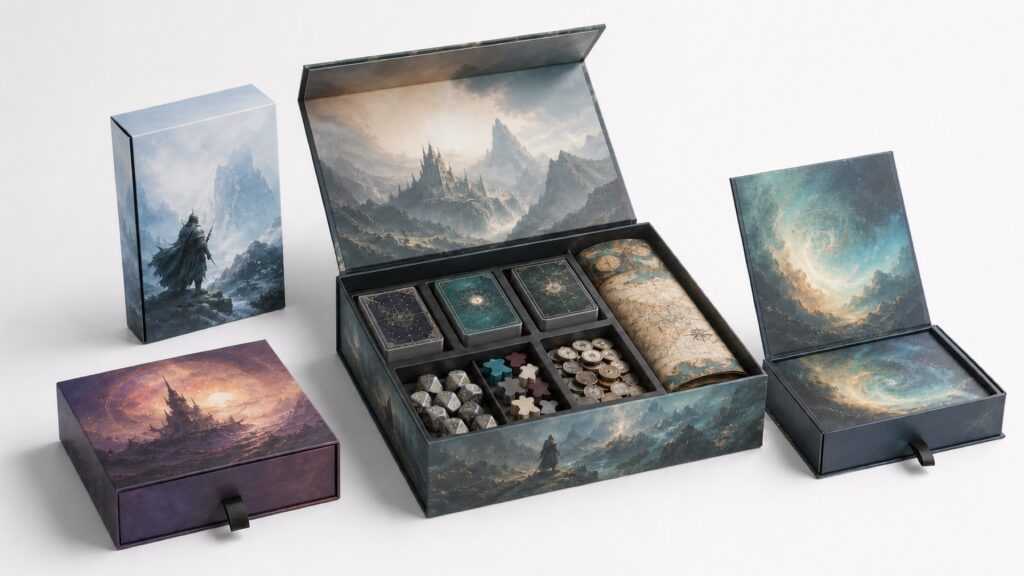
Packaging is part of the product experience, but it also has practical work to do. A board game box must protect printed components, keep everything organized, fit efficiently into shipping cartons and present the game clearly at retail. Choosing the right structure early can prevent an oversized box, damaged components or an insert that no longer fits after materials are confirmed.
This guide introduces common board game packaging options and the information a manufacturer needs before recommending a structure. For a wider view of complete game production, see our custom board game manufacturing services.
1. Start with the complete component list
The box should be designed around the finished game, not selected in isolation. List every deck, board, rulebook, punchboard, miniature, die, token and accessory, together with its size, quantity and estimated thickness. Sleeved cards, assembled dials and unusual metal components may require extra clearance. The packing order also matters because the board or rulebook often sits above the insert.
A preliminary layout can estimate the outer size, but a physical packing test is valuable before mass production. It shows whether components are easy to remove, whether the lid closes correctly and whether empty space allows contents to move during delivery.
2. Compare common custom board game box types
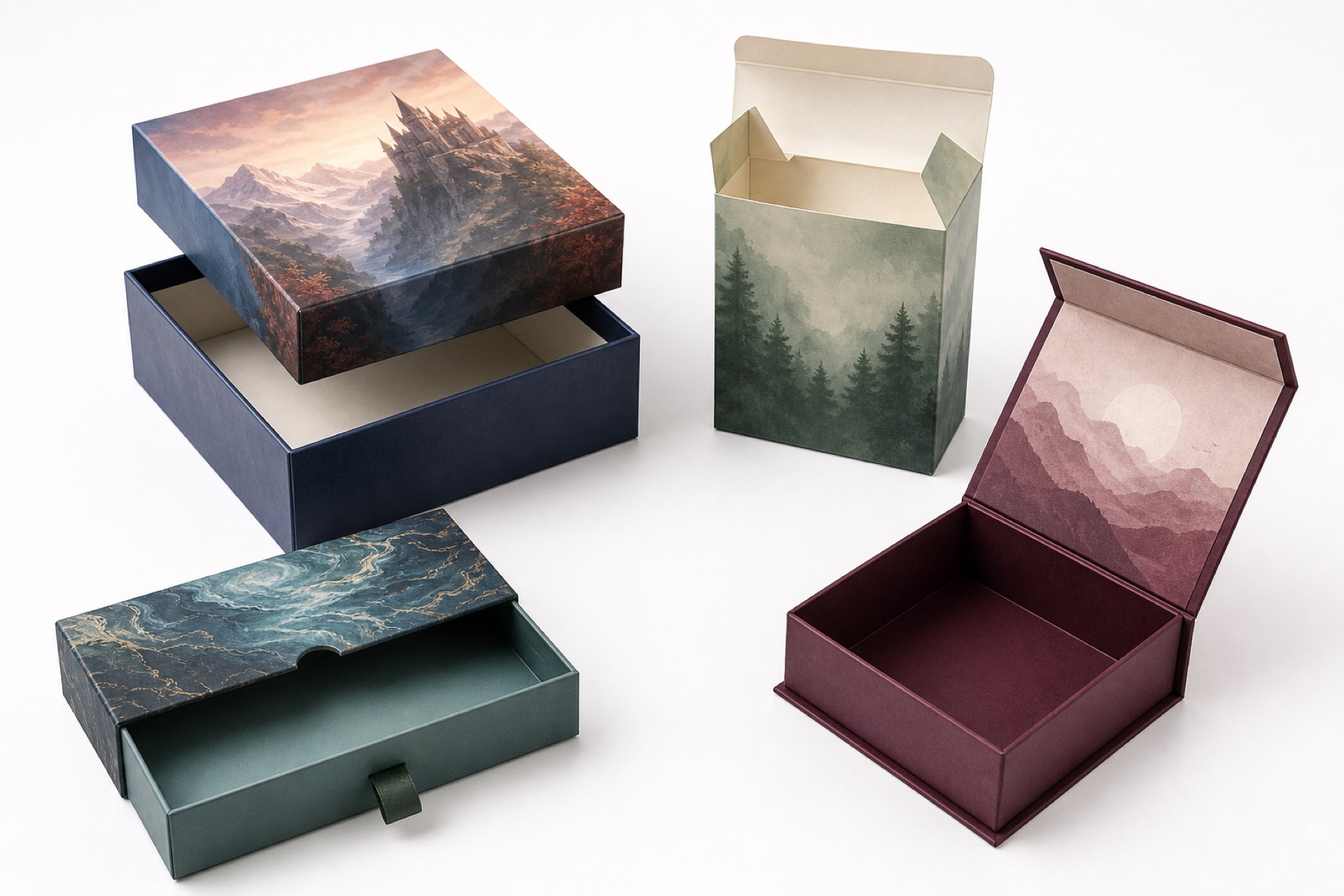
Two-piece rigid boxes are widely used for standard and premium board games. A wrapped greyboard lid and base provide good strength, a large print area and enough depth for boards, cards and components. The lid fit should be tested carefully: too tight is frustrating, while too loose can reduce protection.
Tuck boxes and folding cartons suit compact card games, expansion decks and lighter products. They use less material and ship flat before assembly, but they normally provide less crush resistance than rigid boxes. Paper weight, locking tabs and surface coating should match the product weight and expected handling.
Drawer boxes create a controlled opening experience and can separate a printed sleeve from the inner tray. Magnetic book-style boxes support premium editions, presentation sets and games containing books or accessories. Both structures involve more assembly than a basic lid-and-base box, so their cost and schedule should be reviewed early.
3. Choose an insert for protection and usability
An insert is not only decorative. It limits movement, separates fragile pieces and helps players return components after use. Folded paperboard inserts are lightweight, printable and suitable for simple card wells or compartments. Molded pulp offers a paper-based option for shaped cavities. Plastic trays can form detailed spaces for miniatures and tokens, while EVA foam may be considered for heavier or sensitive accessories.
The final choice depends on component shape, order quantity, presentation requirements and budget. Finger notches, card-well depth and room for sleeved cards should be specified. If future expansions may share the same box, reserve space deliberately rather than increasing dimensions without a packing plan. Niceam Product can also coordinate packaging with the cards, boards, books and accessories listed on our Products page.
4. Plan retail-ready packing and delivery protection
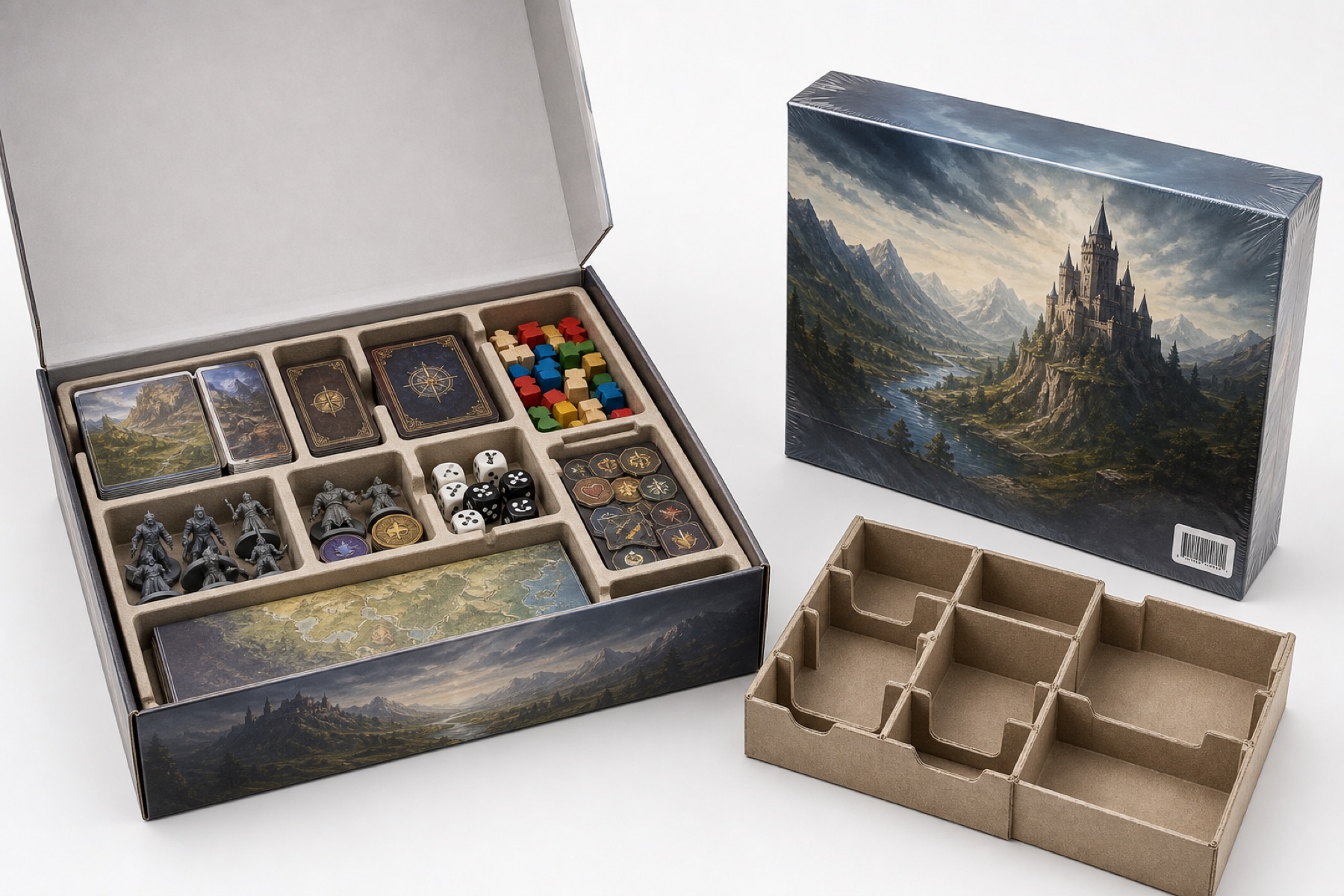
Retail packing may include shrink wrapping, tamper-evident seals, barcode labels or protective sleeves. The artwork should leave a clear area for any required barcode, age mark, warning or distributor label. These requirements vary by market and product, so publishers should confirm them before final artwork approval.
Outer cartons are part of the packaging system too. Box dimensions affect how many games fit in each export carton, the carton weight and the use of pallet space. Protective corners, dividers or additional cushioning may be needed for premium boxes. A packaging structure that looks impressive but wastes shipping volume can increase the landed cost of every unit.
5. Understand how packaging affects cost and lead time
Major cost factors include finished size, board thickness, printed wrap, surface finish, insert material and assembly complexity. Foil stamping, embossing, spot UV and specialty paper can add visual impact, but each process introduces another production and approval step. New cutting dies, molded trays or unusual structures may also require tooling.
Before production, review a dieline, digital proof and physical sample where appropriate. Check the opening action, component fit, color, wrapped corners, insert alignment and carton protection. Packaging changes made after these approvals can affect both price and delivery date.
6. What to provide for a packaging quotation
- Game type, target quantity and destination country
- Complete component list with finished sizes and quantities
- Preferred box type and approximate outer dimensions
- Insert material, compartments and sleeved-card requirements
- Artwork status and required surface finishes
- Retail labels, wrapping and export-carton requirements
- Target launch date and delivery deadline
If the packaging structure is not yet decided, send the component specifications and reference images first. We can review practical options and prepare the information needed for sampling. Contact Niceam Product to discuss a custom board game box, insert or complete retail-ready game package.
Frequently asked questions
Should the box size be finalized before the insert?
The box and insert should be developed together around the confirmed components. Changing one can affect the fit of the other.
Can one supplier produce the box and game components?
Yes. Coordinating packaging with cards, boards, books, punchboards and accessories can make dimensional checks, color control, assembly and final packing more efficient.