Custom Book Printing in China: What Publishers Need Before Requesting a Quote
A useful book-printing quote starts with more than a title and page count. Publishers, creators and tabletop game teams can get a clearer production proposal by defining the book, its packaging and any companion components before comparing manufacturers.
Start with the book’s job, not only its cover
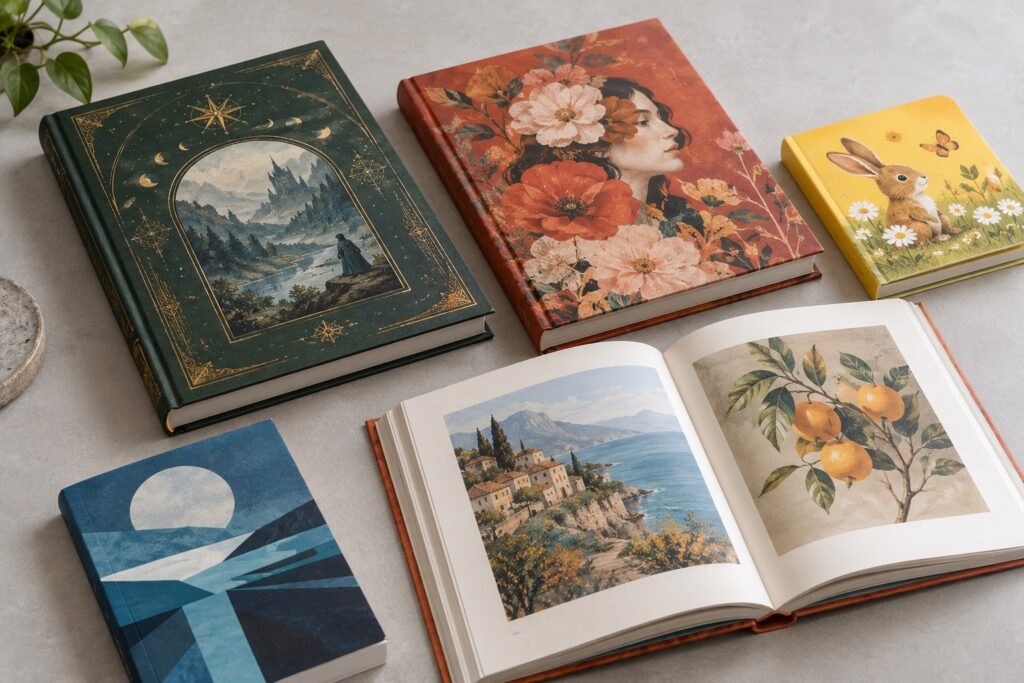
When evaluating a custom book printing manufacturer in China, explain how readers will use the finished book. A retail art book, a children’s board book and a TTRPG sourcebook need different choices for page stock, durability, binding and packing. A board game rulebook may need to fit inside a fixed box and survive repeated handling, while a collector’s edition may place more weight on color reproduction and cover detail.
Hardcover, paperback or board book? Hardcover can suit premium illustrated titles and game-world books; paperback can help reduce unit weight; thick board pages are commonly considered for young readers. Those are starting points, not automatic specifications. Ask for a physical sample before deciding on stiffness, opening behavior, finish and the final retail feel.
Send a quote-ready book specification
Book printing prices cannot be compared reliably when suppliers are quoting different constructions. A concise specification sheet should include:
- Format: closed trim size, orientation, page count and whether pages print in full color or black only.
- Materials: preferred interior and cover paper, thickness or reference sample, coating or lamination, and any special finish.
- Binding: hardcover, softcover, board-book construction or another specified format; note how the book should open and lie flat.
- Volume: quantities for each edition or language, plus any expected reprint quantity.
- Delivery: individual wrap, retail box or slipcase, export carton requirements, destination and requested EXW or FOB basis.
If a specification is undecided, show the intended result and ask for two clearly labeled alternatives. For example, compare two paper choices at the same trim size, page count and quantity. That makes the cost difference meaningful.
Separate artwork approval from structural approval
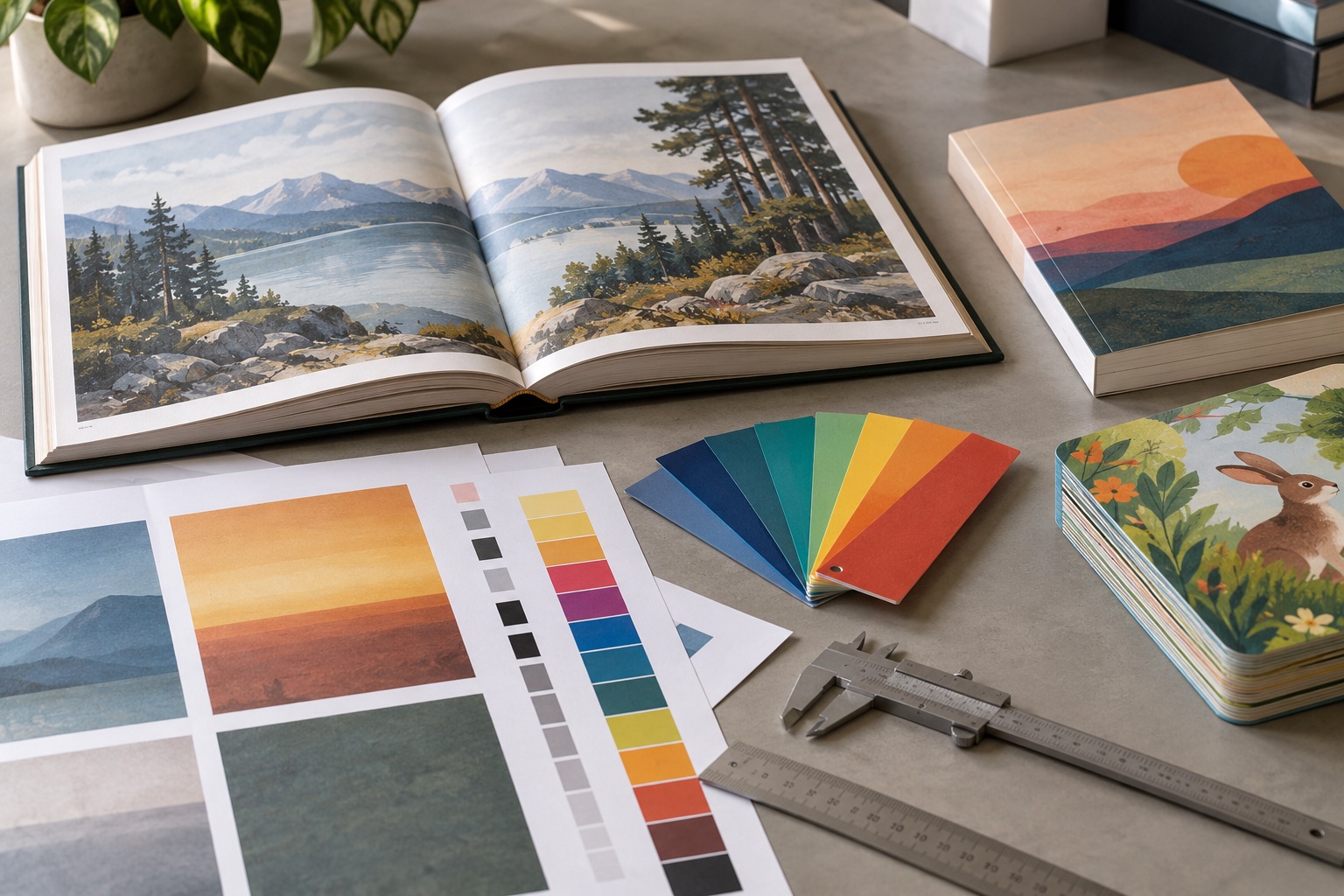
Print-ready interior and cover files should include the agreed trim, bleed and color requirements. The spine width depends on the selected paper, page count and binding, so confirm it against the printer’s final template. A digital proof is useful for text, page order and artwork; a physical production sample helps assess stock, color, binding, opening and packing. Do not approve a complex construction on screen alone.
At sample review, turn every page rather than checking only the cover. Look for missing or repeated pages, text disappearing into the gutter, uneven trimming, inconsistent color across signatures and scuffing on the finish. Check the spine and hinges after repeated opening, then test whether the book fits its slipcase or game-box insert without force. Record requested changes in one revision list and identify which sample version is approved for production. This is especially useful when a translated edition shares artwork but has a different page count.
For a pop-up or other interactive book, provide a working mock-up, movement reference or structural drawings as well as the illustration. When searching for a custom pop-up book manufacturer, ask who will develop the paper engineering, who will prepare dielines, how hand assembly will be managed and which opening-and-closing checks will be performed. These responsibilities and the production route need confirmation for each project before a firm quote.
When a book is part of a tabletop game
Many publishing briefs are not book-only jobs. A board game manufacturer may need to coordinate a rulebook with printed cards, punchboard tokens, maps, dice, an insert and the outer box. For a tabletop game or TTRPG set, send one bill of materials (BOM) showing every component, quantity per set, finish and packing position. This gives the lead supplier a basis for sampling, assembly and final quality control across the complete retail unit.
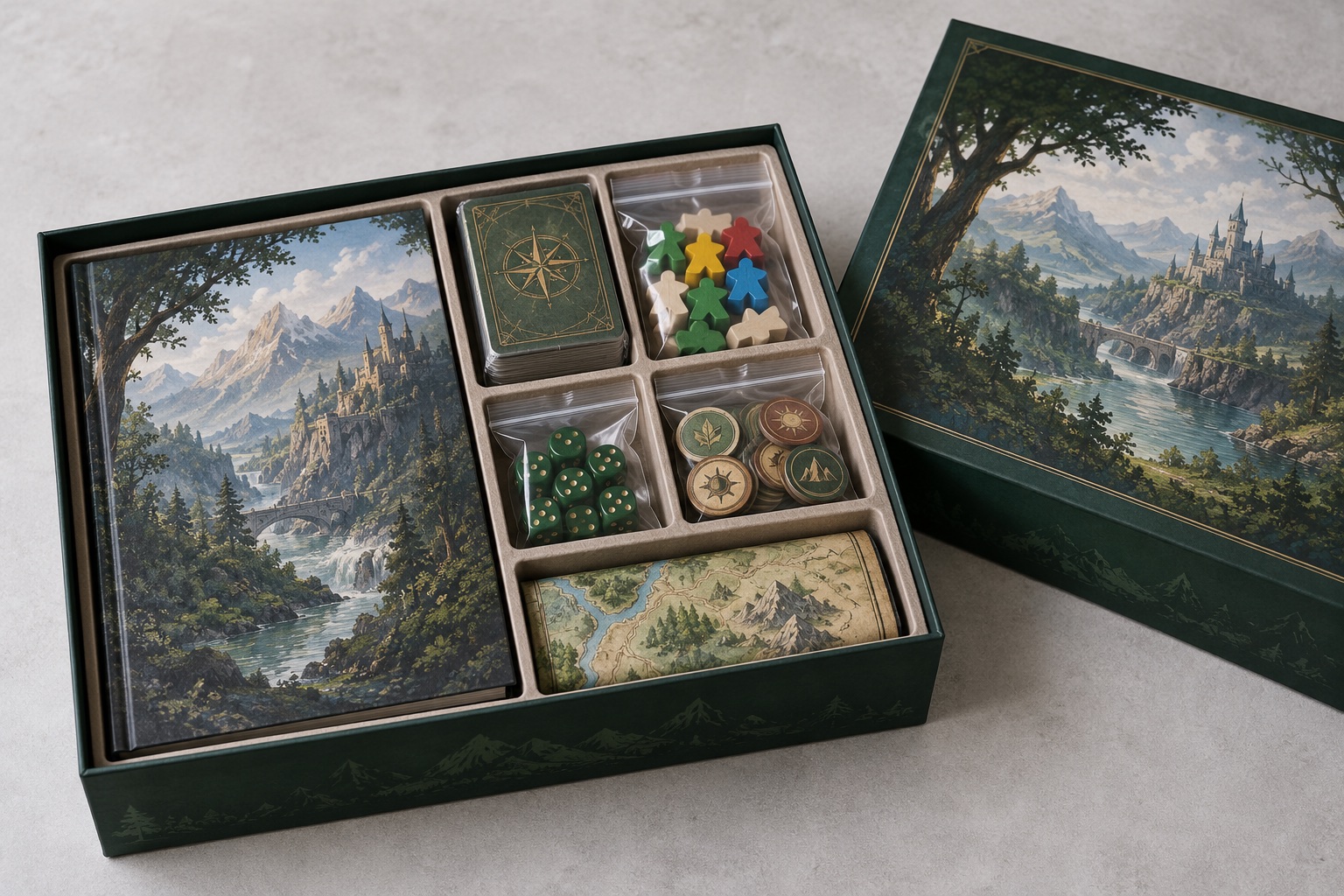
Niceam Product’s printing and tabletop game services cover books, rulebooks, cards, packaging and mixed-component production planning. Tell the team which items must arrive assembled and retail-ready, rather than assuming a book quote includes sourcing and packing every accessory.
Compare the whole quote and the whole schedule
Ask each supplier to separate unit price from sampling, setup, tooling, special finishes, assembly and freight-related items. Confirm export-carton quantity and size, the agreed trade term, and which changes after sample approval would trigger a revised price. A low book-printing unit price may not be the lowest cost for a completed set.
Also separate sample development, mass production after final sample approval and shipping/transit. They are different stages. Quantity, materials, approvals, hand assembly and destination affect the timeline, so request a project-specific schedule rather than treating a general estimate as a guaranteed delivery date.
Ready to request a quote?
Send your format, trim size, page count, paper and binding preferences, artwork status, target quantities, packaging details and destination. If the book belongs in a board game or tabletop RPG set, include the full BOM and packing sequence. Learn about Niceam Product, then share your project for a production review.