How Long Does Board Game Manufacturing Take? A Practical Production Timeline
How long does it take to manufacture a board game? The useful answer starts with a clear definition of the finish line. A factory may quote time to complete production, while a publisher needs a date for packed games at the port or in a warehouse. Sampling, approvals and freight can sit outside the quoted production period.
This guide breaks down the board game production timeline so publishers can plan a launch around real approval points and component dependencies.
The short answer: around 30 days for a straightforward Niceam order
For a typical custom board game order of about 500 to 2,000 sets, Niceam Product normally estimates around 30 days from approval of the final sample and production files to completed manufacturing and packing. This is a planning reference, not a fixed promise for every project. Order quantity, materials, custom tooling, specialist components and current capacity determine the schedule we confirm in a quotation.
The clock begins only when the bill of materials (BOM), artwork, sample and packing instructions are approved. Design work, sample revisions and transport to the destination are additional. A card game with standard components and a tabletop wargame with custom miniatures will follow different critical paths.
What belongs in a board game manufacturing timeline?
| Stage | What happens | Schedule treatment |
|---|---|---|
| Specification and file review | Confirm BOM, sizes, materials, artwork, quantities and packing method. | Before the production estimate. |
| Sampling and approval | Check structure, print, components and the complete pre-production sample. | Separate; revision rounds can change the date. |
| Printing and components | Produce cards, boards, boxes, books and sourced parts on coordinated schedules. | Included after final approval; tasks may overlap. |
| Assembly, QC and export packing | Count parts, pack retail sets, inspect them and prepare cartons. | Included in the confirmed production schedule. |
| International freight | Move finished cartons to the agreed destination. | Quoted separately by shipping method and destination. |
1. Close files and approve the right sample
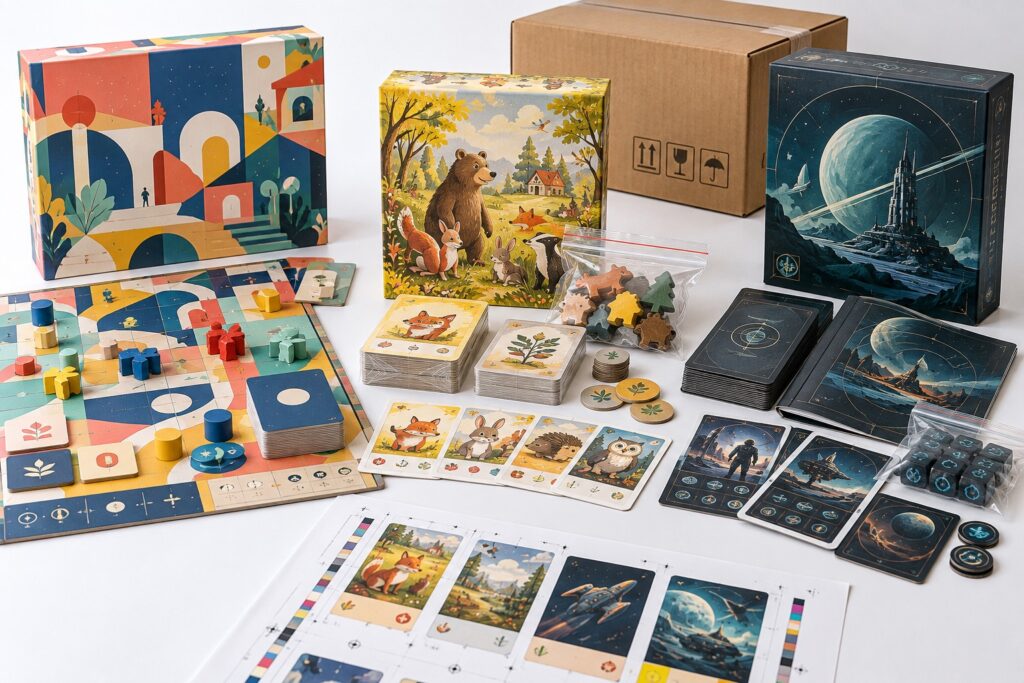
File review is more than checking image resolution. The manufacturer must reconcile the BOM with card counts, punchboard layouts, box size, insert cavities, rulebook pages and assembly instructions. Missing details create questions that stop the next stage. Our board game manufacturing file guide lists the information to prepare.
A structural white sample, printed proof and full pre-production sample answer different questions. If artwork, finish or component fit changes after approval, allow for another review. See our prototype and pre-production sample guide for the differences.
2. Plan printing and custom components together
Cards, folding boards, punchboards, rigid boxes and books can use different equipment and finishing steps. Wooden pieces, dice, metal accessories or molded miniatures may come from specialist suppliers. Work can run in parallel, but final assembly cannot start until every required component passes its checks.
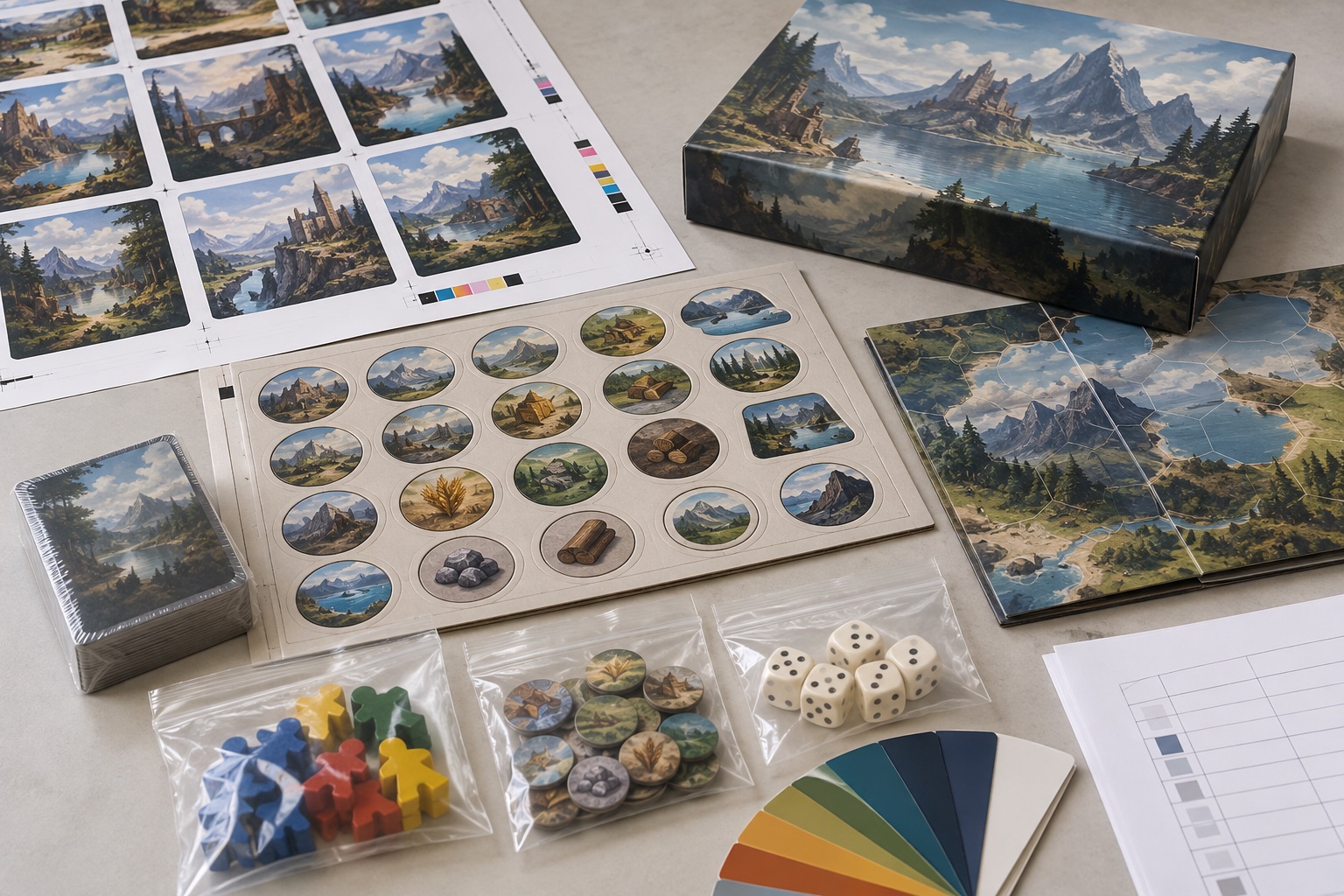
The longest item sets the critical path. New molds, complex finishes, unusual book binding or a late change to a fitted insert can extend the board game manufacturing lead time. A good production schedule names these dependencies rather than simply adding every component’s duration together.
3. Include assembly, quality control and cartons
Finished components still need to become complete retail games. Decks are collated and tightly wrapped. Wooden pieces, dice and loose tokens are packed in separate clear PE bags when specified, then placed into the insert. Teams check counts, orientation, box fit, labels and the approved packing order.
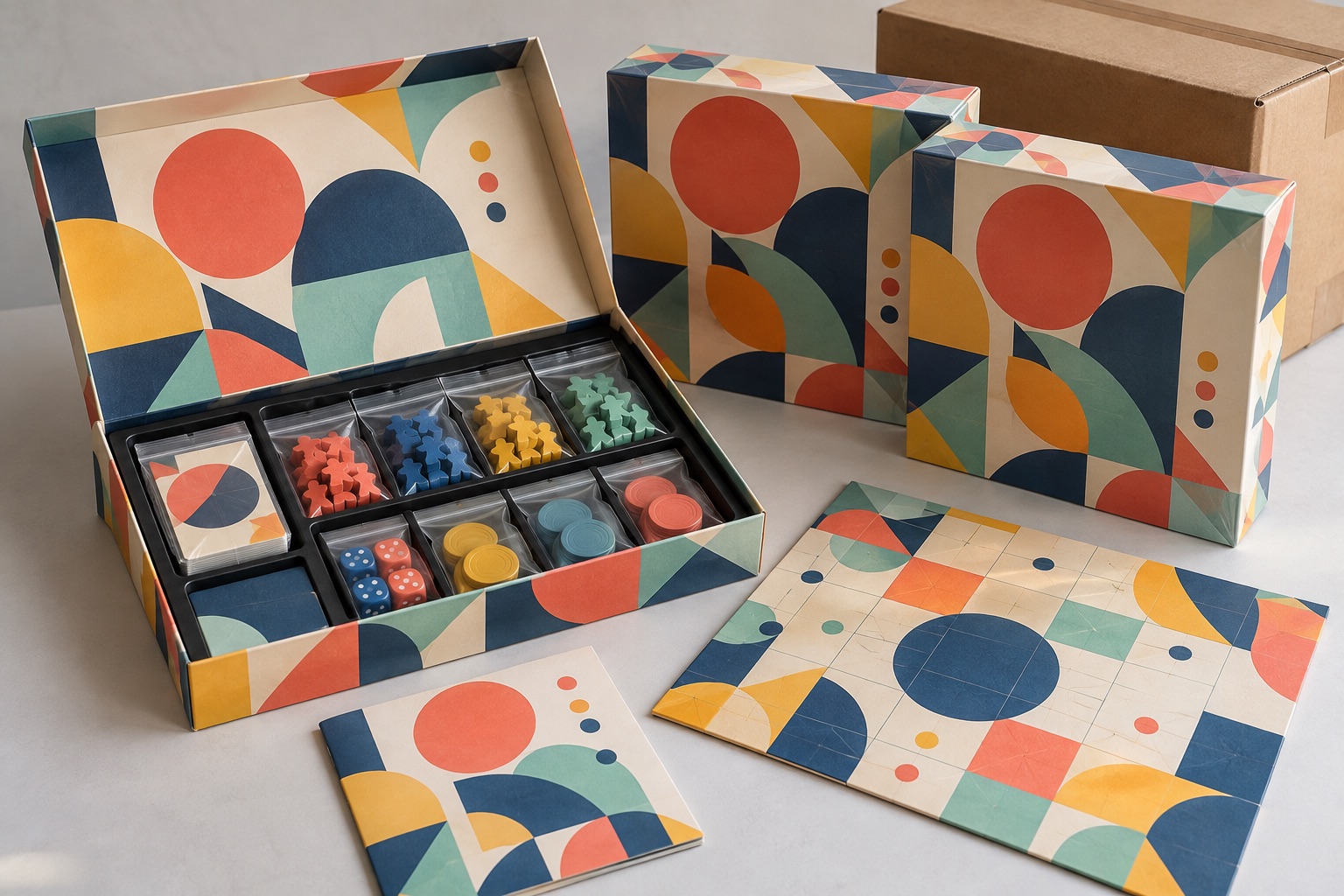
Inspection should compare finished sets with the approved sample and written specifications. Export-carton quantity, dimensions and weight are part of this stage, because they affect freight planning. Our quality control checklist covers the finished-product checks in more detail.
What most often adds time?
Late artwork or rule changes, unapproved color references, extra sample rounds, new molds, component shortages and packaging designed before parts are finalized can all move the delivery date. Larger quantities can also require a different schedule. For tabletop RPG books, trading card games or miniature-heavy wargames, the relevant printing, collation, binding or tooling steps should be reviewed individually.
To protect a launch date, agree on a file-freeze date, one version-controlled BOM and a decision owner for each approval. Ask the supplier which component is on the critical path and when final assembly can begin. Add a buffer for revisions and freight instead of treating the best-case factory date as the retail launch date.
Does the production estimate include shipping?
No. The roughly 30-day reference ends when the agreed finished goods are manufactured and packed. Transit time depends on the destination, shipping method and booking. When comparing a board game manufacturer in China, ask whether the quoted handover is EXW or FOB, which port applies and when carton dimensions and weights will be available. This makes the delivery plan more useful than a factory completion date alone.
Request a schedule tied to your actual game
Send the latest BOM, artwork status, target quantity, destination, component reference images and preferred delivery date. Niceam Product can coordinate printed parts and specialist-sourced components as one custom board game manufacturing project, then confirm a production and packing schedule for that specification. Contact our team for a project review and quotation.