
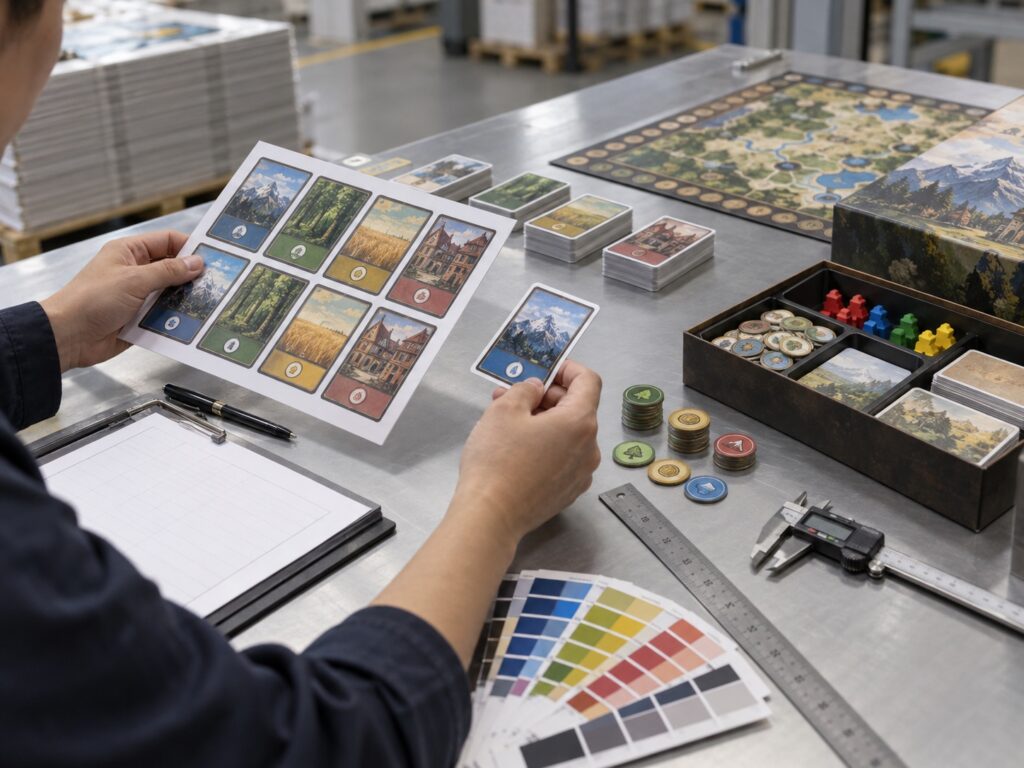
Board game quality control is more than checking whether the box looks correct. A finished game may contain printed parts, dice, wooden, plastic or metal components, an insert and retail packaging. One defect can affect gameplay, presentation or saleability.
For publishers comparing a board game manufacturer, the most useful question is not simply “Do you have QC?” It is what will be checked, when the checks occur and which approved reference will be used. This checklist explains the main inspection points to define before shipment.
Establish the Approved Inspection Standard
Inspection should begin with a confirmed bill of materials (BOM), final files, approved samples and written specifications. Together, they establish every component, quantity, material, finish and packing order.
Digital artwork alone cannot confirm paper feel, board thickness or component fit. Record approved changes so production and inspection teams use the same version. Our board game manufacturing process explains where sampling and approval fit into the project.
Board Game Quality Control at a Glance
| Inspection area | Main checks | Risk controlled |
|---|---|---|
| Printed parts | Color, registration, cutting, coating and surface condition | Visible inconsistency or unusable pieces |
| Components | Dimensions, count, color, finish and function | Missing or incompatible parts |
| Box and insert | Structure, fit, protection and presentation | Movement, damage or poor assembly |
| Finished game | Collation, packing order, wrapping and labels | Incomplete or incorrectly packed units |
| Export cartons | Quantity, carton strength and markings | Damage or handling errors in transit |
1. Inspect Cards and Printed Components
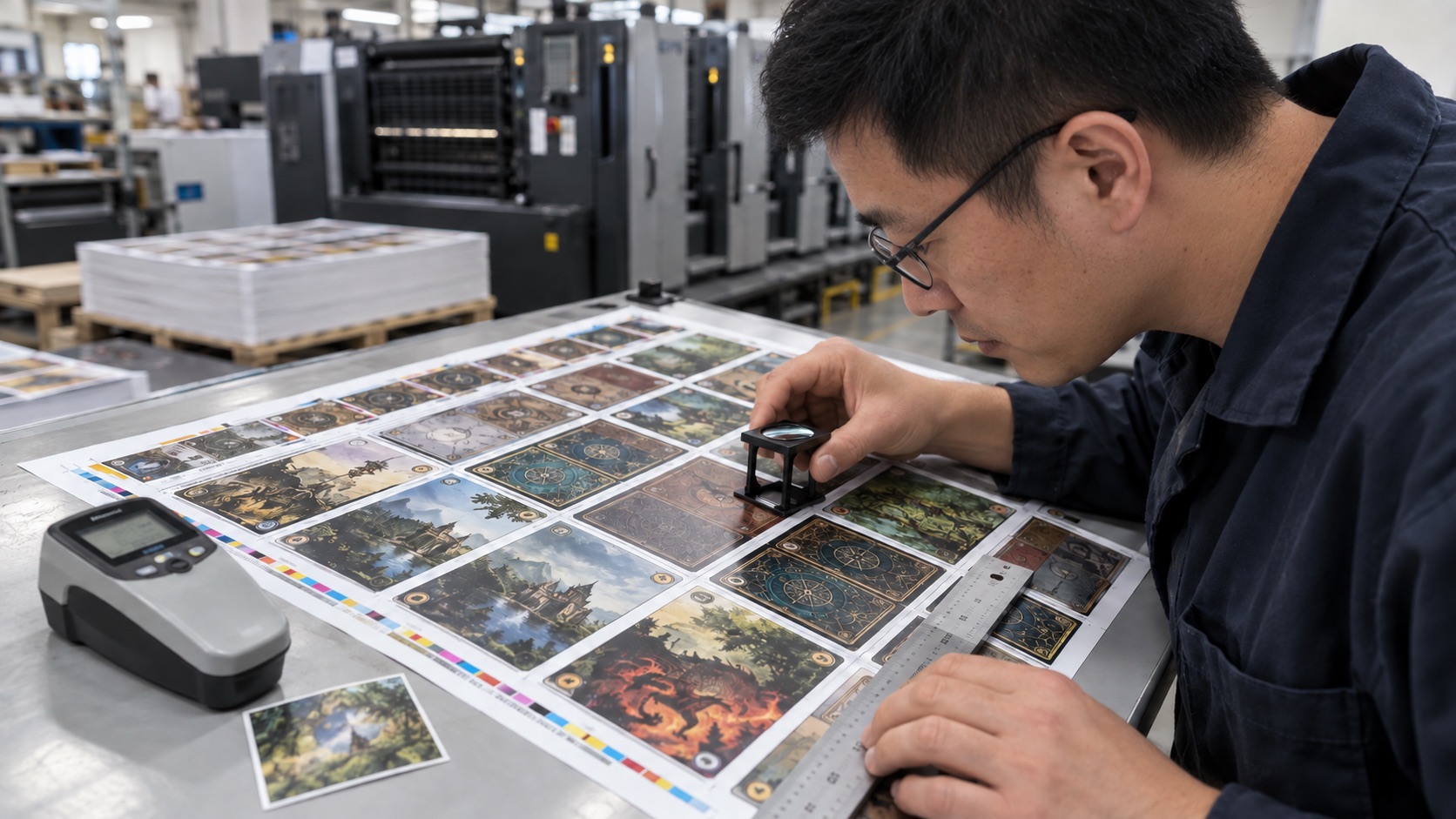
Check cards for size, corner radius, cutting, front-to-back alignment, color, coating and surface damage. Compare production samples with the approved reference, especially dark areas, small text and repeated card backs. Count decks and check for duplicate, missing or incorrectly collated cards.
Game boards require checks for alignment, mounted edges, folding, warping and surface condition. Rulebooks need correct page order, trimming and binding. See our board game components guide for specifications to confirm before production.
2. Check Punchboards, Tokens and Tiles
Punchboards must balance clean separation with secure holding points. Inspect die-cut alignment, cut depth, paper cracking and whether tokens can be removed without tearing the artwork. Check positions across the sheet, including the center and edges.
After punching, confirm token dimensions, thickness and fit with stands, slots or inserts. Assemble modular tiles to identify gaps, inconsistent cutting or mismatched artwork.
3. Verify Dice, Wood, Plastic and Metal Parts
Mixed-material components need separate criteria. Check dice for size, color, faces and surface marks; wooden pieces for shape, paint, printing and splinters; plastic or resin parts for molding and deformation; and metal pieces for plating, edges and color fill.
Small components should be counted and protected before packing. Wooden meeples are normally placed in transparent PE resealable bags before being fitted into the insert, rather than left loose where they can move or rub against printed parts.
4. Test the Box, Insert and Complete Pack
The insert should hold every component without excessive pressure or movement. If sleeves are supported, test sleeved and unsleeved cards. Confirm that books lie flat, trays can be removed and the lid closes correctly.
Inspect box corners, wrapped edges, lid fit and finishes. Barcodes, age marks and product information must match the approved file. The board game packaging guide covers box and insert decisions that influence protection.
5. Inspect Final Assembly and Packing
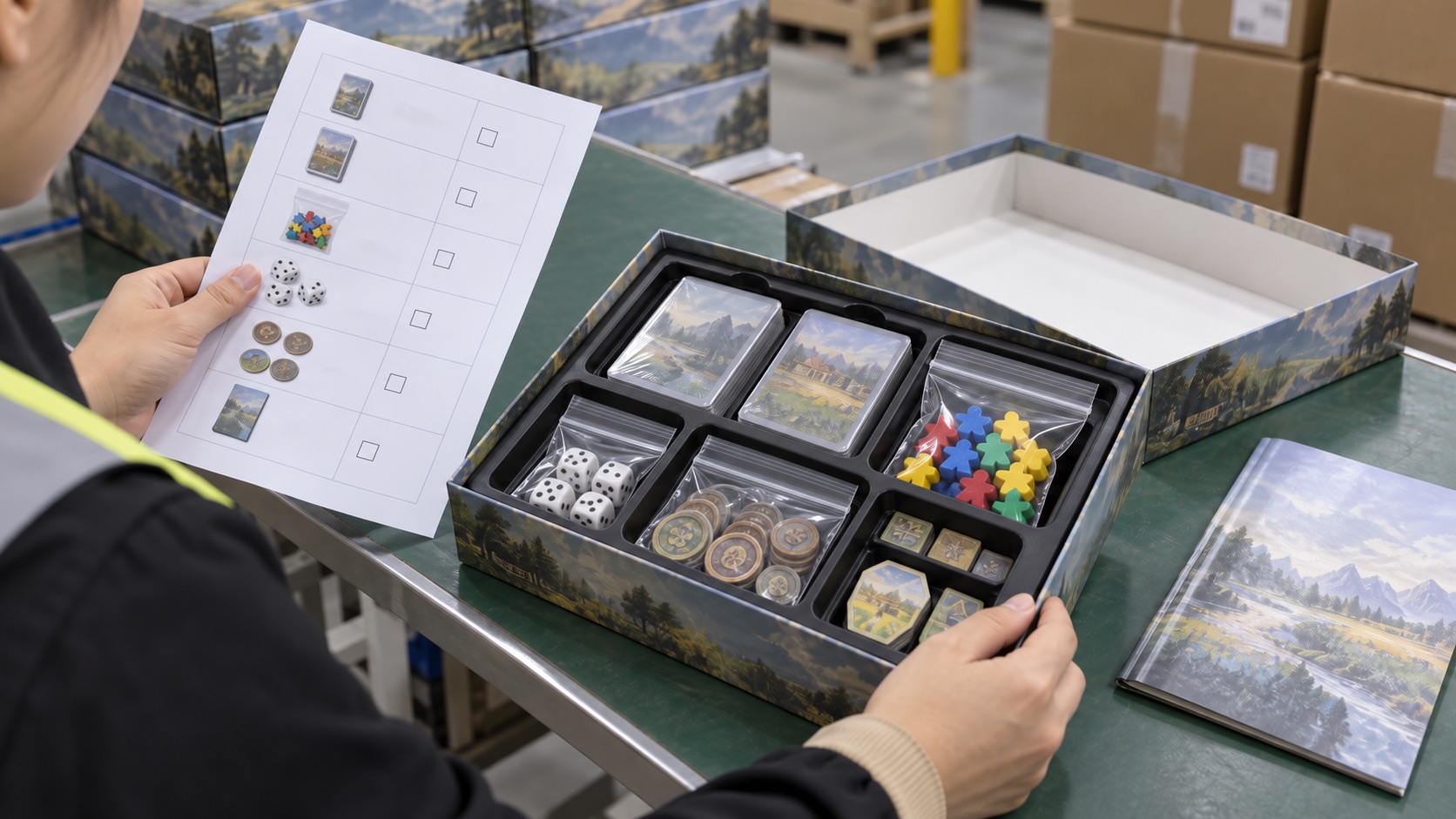
A finished-game inspection should follow the packing sequence. Open selected units and verify every component against the BOM, including items beneath trays or inside smaller boxes. Check bag sealing, deck wrapping, insert orientation and rulebook placement.
Review export cartons for quantity, protection, condition and shipping marks. The inspection plan should explain sample selection and how critical, functional and cosmetic issues are handled. Agree on the acceptance standard before mass production.
What Publishers Should Request Before Shipment
Ask for confirmation that production follows the approved specifications and request suitable inspection records for the project. Useful evidence may include photos of printed parts, component measurements, packing checks, carton markings and a summary of issues found and corrected.
Do not wait until the shipment date to define quality expectations. Share the target market, component list, critical functions, appearance requirements and packaging risks during quotation and sampling. Niceam’s factory and quality overview provides more information about our production support.
Frequently Asked Questions
Is an approved sample enough for quality control?
It is an important reference, but it should be supported by the final BOM, files, component specifications and packing instructions. A sample cannot show the required quantity or every acceptable tolerance by itself.
Should every finished board game be opened?
The inspection method depends on the project and packing process. Component counting can occur during assembly, while selected finished units can be opened to confirm the complete pack. The agreed plan should protect product integrity while providing meaningful verification.
When should quality requirements be confirmed?
Define critical requirements before quotation, refine them during sampling and approve the final inspection standard before mass production. Late changes can affect cost, timing and consistency.
Niceam Product supports custom board game manufacturing with printed components, mixed-material accessories, assembly, packing and project-specific quality checks. Send your BOM, quantity and quality requirements for a manufacturing review and quotation.