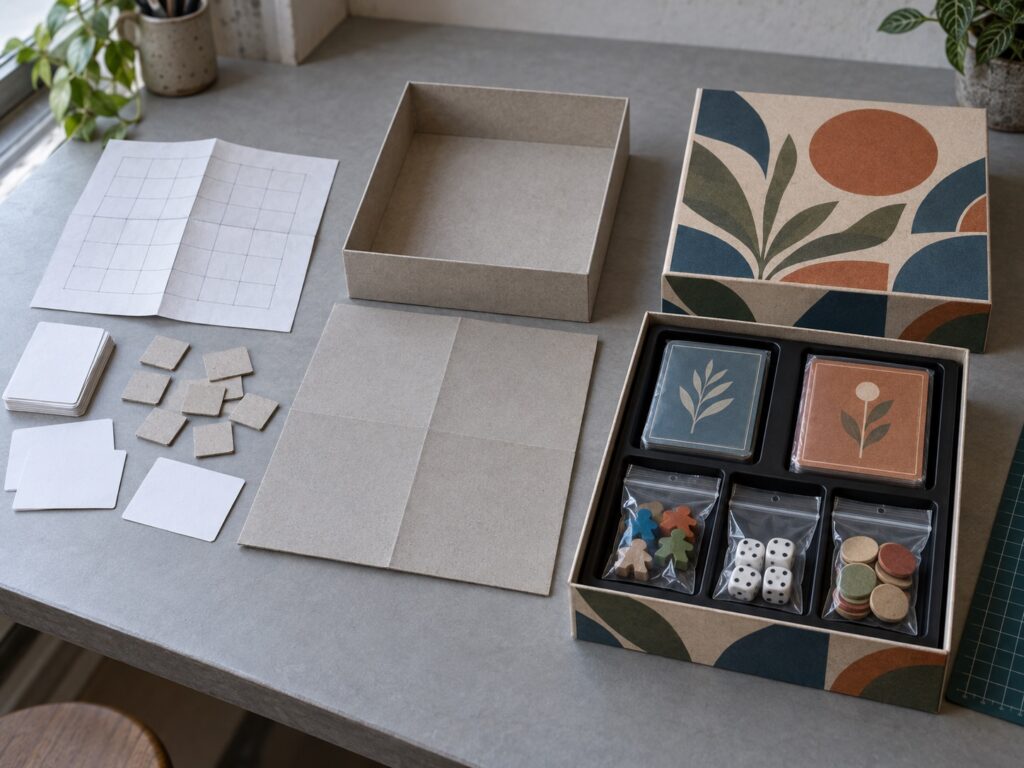
A board game prototype and a pre-production sample are not the same thing. One helps prove that the game works. The other helps confirm that the manufacturer can build, assemble and pack it to an approved specification.
Publishers sometimes ask for a “prototype” when they actually need a white sample, print proof or pre-production sample. Using the correct term makes quotations clearer and keeps approval tied to the right production risk.
Prototype, Proof and Pre-Production Sample at a Glance
| Stage | Main purpose | Typical features | Not intended to prove |
|---|---|---|---|
| Gameplay prototype | Test rules, balance and player experience | Temporary cards, boards and components | Final materials, color or packing |
| Structural white sample | Check size, construction and fit | Unprinted box, board, insert or paper parts | Finished artwork and surface effects |
| Printed proof or digital sample | Review content, layout and approximate color | Printed cards, sheets, books or packaging | Every mass-production material and process |
| Pre-production sample | Approve the intended finished specification | Near-final materials, components, finishes and packing order | Automatic correction of unresolved files or specifications |
| Mass-production reference | Control consistency during production | Approved sample, BOM, files and written tolerances | Changes that were never formally approved |
Each sample round should answer a defined production question.
1. Use a Gameplay Prototype Before Factory Sampling
A gameplay prototype is primarily a design tool. It should confirm rules, card quantities, board layout, component use and play time before production specifications are locked.
It does not need premium printing. Changing a low-cost prototype is easier than changing artwork after a manufacturer has prepared files, dies or tooling. Complete blind playtesting before treating the component list as final.
When approaching a custom board game manufacturer, provide the latest bill of materials (BOM), dimensions, quantities and reference images. A stable component list produces a more useful quotation and sample.
2. Use White Samples and Print Proofs to Isolate Risks
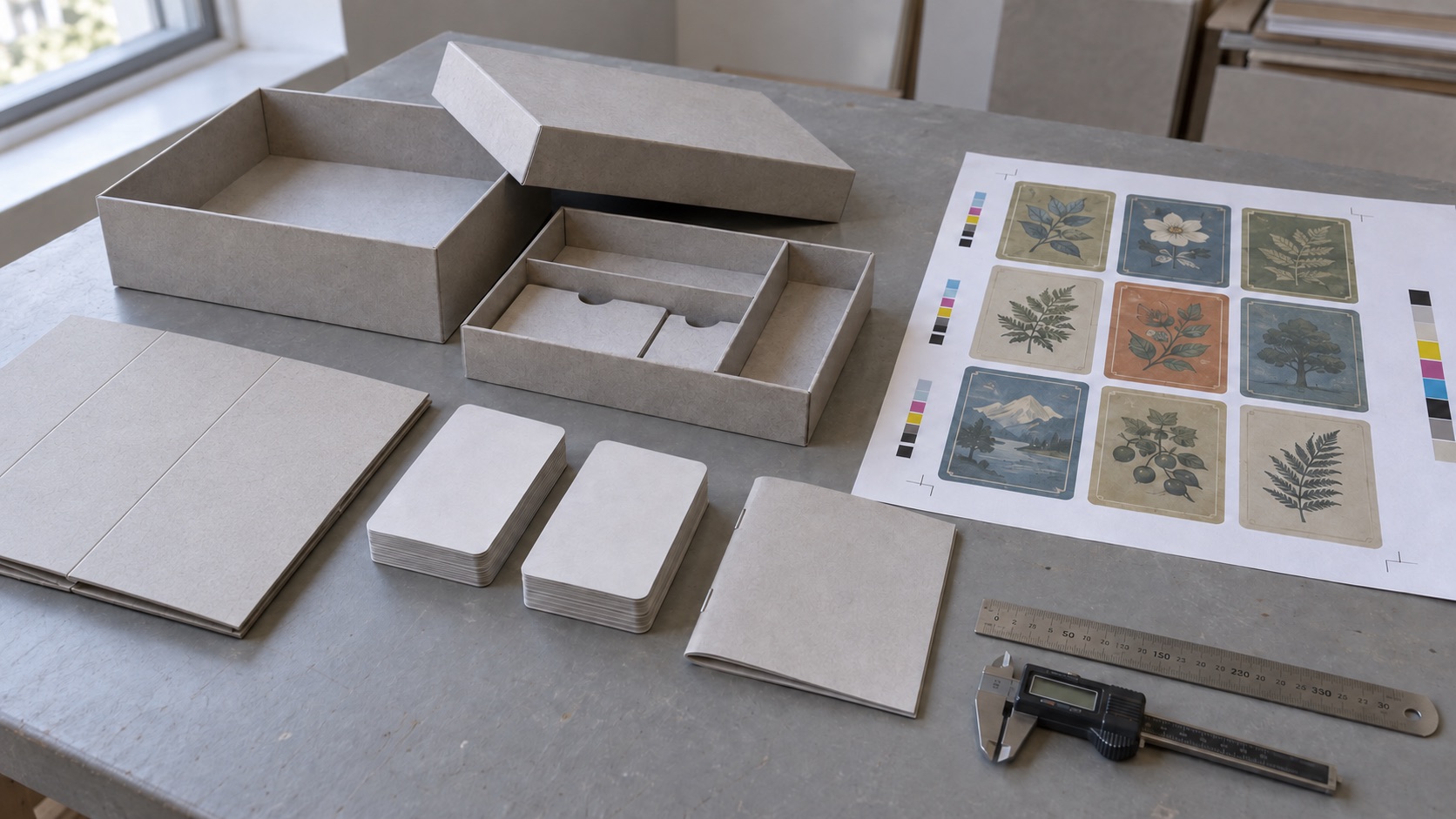
A structural white sample answers physical questions: Does the lid fit? Does the folded board sit flat? Can the insert hold sleeved cards? Is the rulebook too thick for the box?
Because it is unprinted, the team can assess construction separately from color approval. This is valuable for custom boxes, inserts, folding boards and unusual paper engineering.
A printed proof can reveal missing fonts, low-resolution images, incorrect bleeds, small text or alignment issues. Color and finish may be representative rather than identical to mass production, so limitations should be stated before approval. Our manufacturing file guide explains what to submit.
3. Approve a Pre-Production Sample Against the BOM
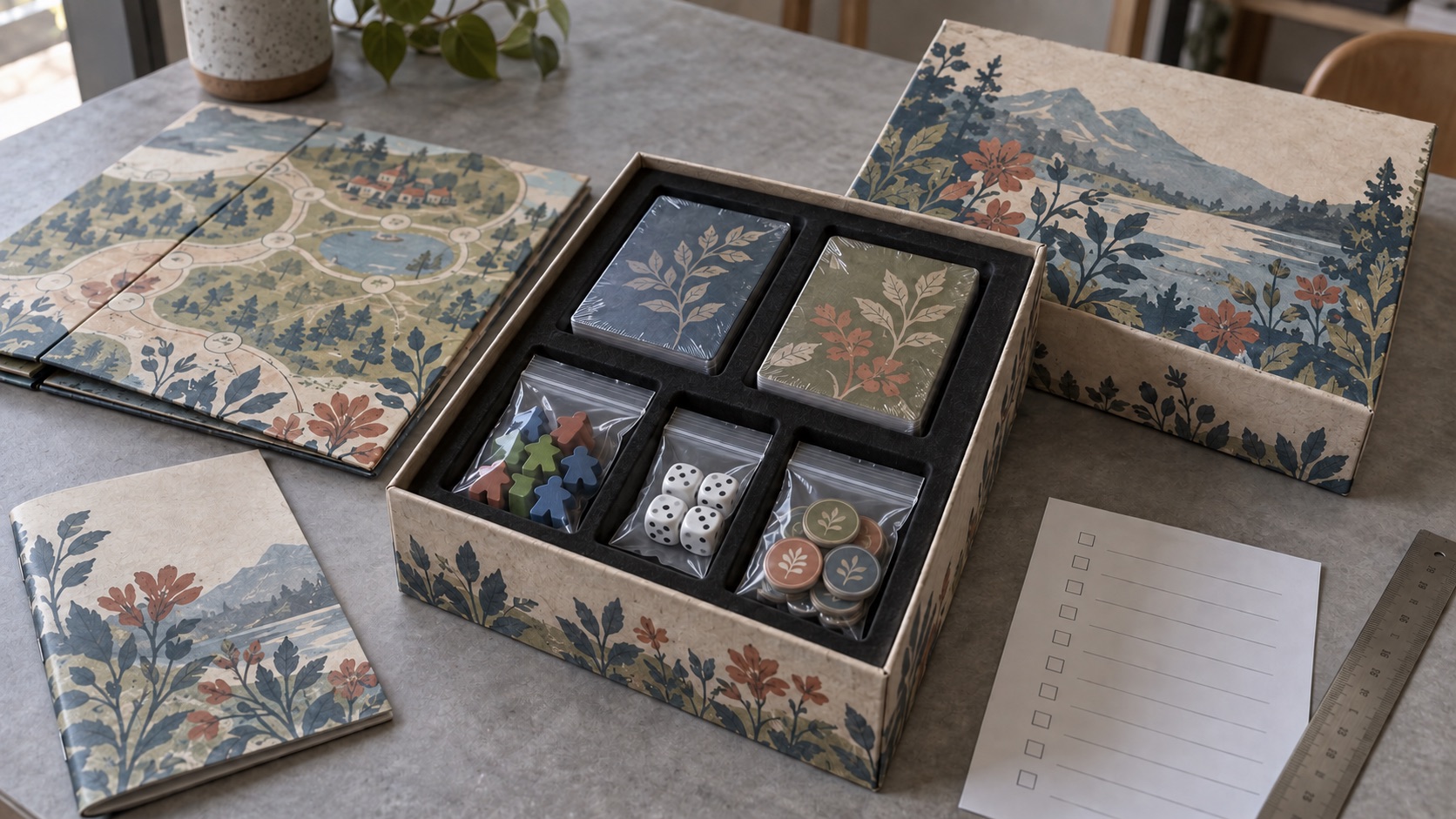
A board game pre-production sample brings the full product together. It should be checked against the approved BOM, artwork, dimensions, materials, finish list and packing instructions, not only against photographs.
The review should cover card stock and finish, punchboard thickness, box construction, insert fit, component colors, book binding, deck wrapping, component bagging and the order in which everything is packed. Dice, tokens and wooden pieces should be protected according to the approved packing plan rather than placed loose in the insert.
Not every pre-production sample uses the complete mass-production line. Short-run printing, hand assembly or sample tooling may be used. The manufacturer should identify differences that could affect color, finish or tolerances. The approved sample and written specifications then become the production reference.
What Publishers Should Check Before Approval
Use measurable comments. Record the component, issue, required change and approved result.
Check these areas before signing off:
- Content: card count, page order, language versions, barcodes and legal marks.
- Dimensions: card size, board folds, token diameter, box fit and insert cavities.
- Print: color, registration, small text, image resolution and front-to-back alignment.
- Materials and finishes: paper stock, board thickness, lamination, varnish, foil or spot effects.
- Components: quantity, color, shape, function and compatibility with the game.
- Packing: wrapped decks, separate PE bags where required, rulebook position and carton markings.
For a broader finished-product review, use our board game quality control checklist.
How Many Sample Rounds Are Necessary?
There is no universal number. A simple card game may need fewer rounds than a large game with custom inserts, miniatures and metal parts. The key is whether every high-risk decision has an approved reference.
Separate structural changes from artwork corrections. Consolidate feedback into one marked document and assign version numbers. Informal changes create confusion and can extend the board game manufacturing process.
What to Send for an Accurate Sample Plan
Send a BOM, artwork, dimensions, material and finish requirements, target quantity, destination market and packing method. Flag critical details such as sleeved-card support, color matching, miniature fit or retail labels.
State what the next sample must prove. The supplier can then recommend a white sample, print proof, component sample or complete pre-production sample.
Frequently Asked Questions
Can a pre-production sample be used for photography or crowdfunding?
Often yes, provided sample-process differences are understood. Do not present a hand-finished effect as guaranteed mass-production output without written confirmation.
Does approving a sample approve every production tolerance?
No. A single sample cannot define all acceptable variation. Critical dimensions, colors, functions and cosmetic standards should also be recorded in the BOM, drawings or inspection criteria.
When should mass production begin?
Begin only after files, specifications, sample comments and commercial details are closed. Write down every approved exception so all teams use the same reference.
Niceam Product supports prototype review, structural sampling, printed samples, pre-production approval and custom board game manufacturing. Send us your BOM and sampling requirements to receive a practical sampling and quotation plan.
Plan approvals against your launch date using our board game manufacturing lead time guide, which separates sampling, production, assembly and international freight.