
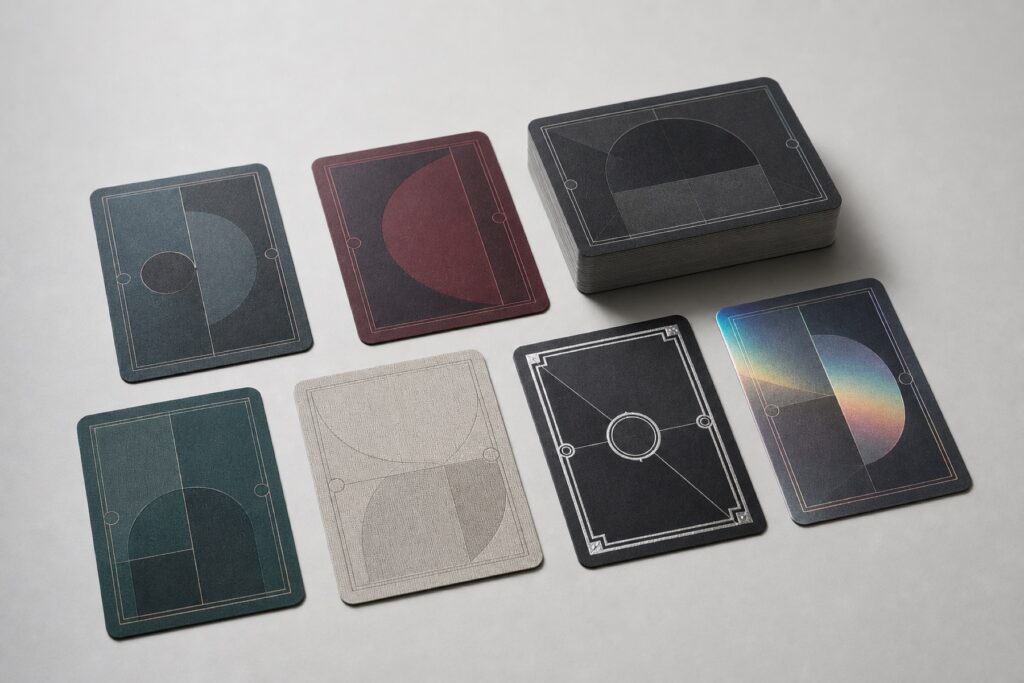
The finish of a trading card changes how artwork reflects light, how the surface feels and how easily a collector can identify a premium or rare card.
For publishers planning custom trading card printing, the finish must work with the artwork, stock, rarity structure and packaging. This guide explains the main options and the information needed before sampling.
Compare Common TCG Card Finishes
| Finish | Visual or tactile result | Typical use |
|---|---|---|
| Matte or gloss coating | Controlled low or high sheen | Standard cards and fixed decks |
| Linen texture | Fine embossed pattern and tactile handling | Frequently played decks |
| Metallic foil | Reflective silver, gold or colored detail | Logos, borders and premium accents |
| Holographic effect | Diffractive rainbow or patterned reflection | Rare, promotional and collector cards |
| Spot UV | Selective gloss over a contrasting surface | Symbols, characters and graphic details |
1. Start with the Base Card, Not the Effect
A special finish cannot correct an unsuitable card construction. First confirm size, stock, core, thickness and surface coating. The same foil can behave differently on two materials, while texture may change color and shuffle feel.
Ask for physical samples instead of choosing from a name alone. Our card game printing guide explains the broader relationship between stock, cutting, collation and packaging.
2. Choose Between Metallic and Holographic Effects
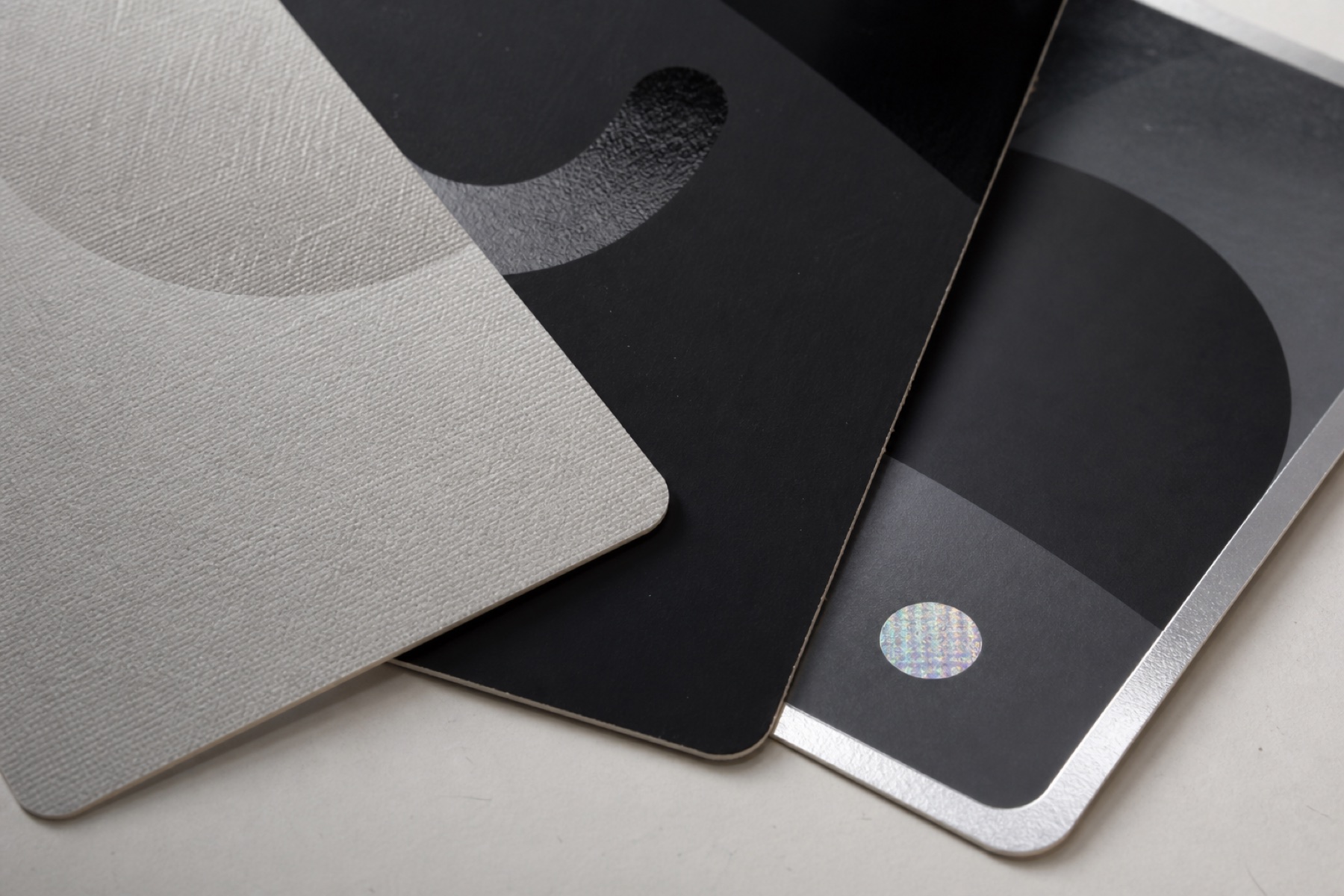
Foil effects can follow different production routes. Localized transfer foil is often used for a logo, frame or symbol. A broad holographic surface may use a reflective layer with controlled white and color printing above it. The method depends on coverage, artwork and quantity.
Metallic foil produces a clean reflective accent. Holographic patterns change with the viewing angle, making them useful for rare or promotional cards. Uncontrolled foil behind text or faces can reduce contrast and readability.
3. Use Spot UV and Tactile Effects Selectively
Spot UV adds gloss to specified areas. It can highlight a character, icon or border against a matte background. Raised coatings add a tactile layer, but the available height and detail depend on the process.
Small effects require accurate registration. Thin lines, tiny gaps and effects placed close to a cut edge need practical tolerances, so the finishing mask should be reviewed before production.
4. Consider Handling as Well as Appearance
Matte, gloss and linen finishes influence friction, fingerprints and shuffling. Gloss may look vivid but show marks more easily. Matte can reduce glare, while linen changes the tactile feel.
Evaluate samples as a complete deck. Shuffle, fan and sleeve them, then test the stack inside its intended box. The finish should support collecting and normal gameplay.
5. Build a Clear Collector Hierarchy
Many TCG products combine standard, rare, foil and promotional groups. Define which artwork receives each finish and how many copies appear in each product. Use a controlled file and collation system.
A simple hierarchy may use a base coating for standard cards, foil for rare cards and a distinctive effect for promotions. This keeps the system understandable and inspection practical. See our custom TCG manufacturing guide for collation and packaging considerations.
6. Prepare Separate Production Layers
Supply final CMYK artwork with clearly named masks for foil, white ink, spot UV or other effects. Use vector shapes where possible and identify every card group consistently. A visual mockup cannot replace production files showing where each effect begins and ends.
Include an effect reference and note whether reflective material should remain visible beneath color, artwork or background areas. Confirm bleed, safe area, corner radius and the relationship between the effect mask and cut line.
7. Approve Samples and Quality Standards

Inspect samples under neutral light and at several viewing angles. Check finish registration, surface scratches, coating uniformity, color, card-back alignment, cutting and corner shape. Reflective cards should also be checked for excessive curl and for consistency across the approved production group.
Agree on an approved sample and inspection method before mass production. Natural process variation should be discussed realistically, especially for fine holographic patterns and effects that cross dark and light artwork.
What to Include in a Quotation Request
Provide card size, unique artwork count, copies per design, total quantity, stock preference and a list of finishes by card group. Add packaging, collation, destination and required schedule. Reference images help communicate the intended appearance, but should be supported by written specifications and effect masks.
Frequently Asked Questions
Can one TCG set contain several card finishes?
Yes. Standard and premium groups can use different finishes, provided every artwork file, quantity and collation rule is clearly identified.
Should a foil effect be approved from a digital proof?
A digital proof can confirm placement, but a physical sample is more reliable for reflection, texture, color interaction, registration and handling.
What commonly causes foil cards to look different from the artwork preview?
Screen previews cannot reproduce changing reflections. Material choice, white-ink coverage, printed color, viewing angle and lighting all affect the final appearance.
Niceam Product supports custom TCG and card game printing, selected specialty finishes, packaging, collation and production quality control. Send your card list and finish requirements for a manufacturing review.