
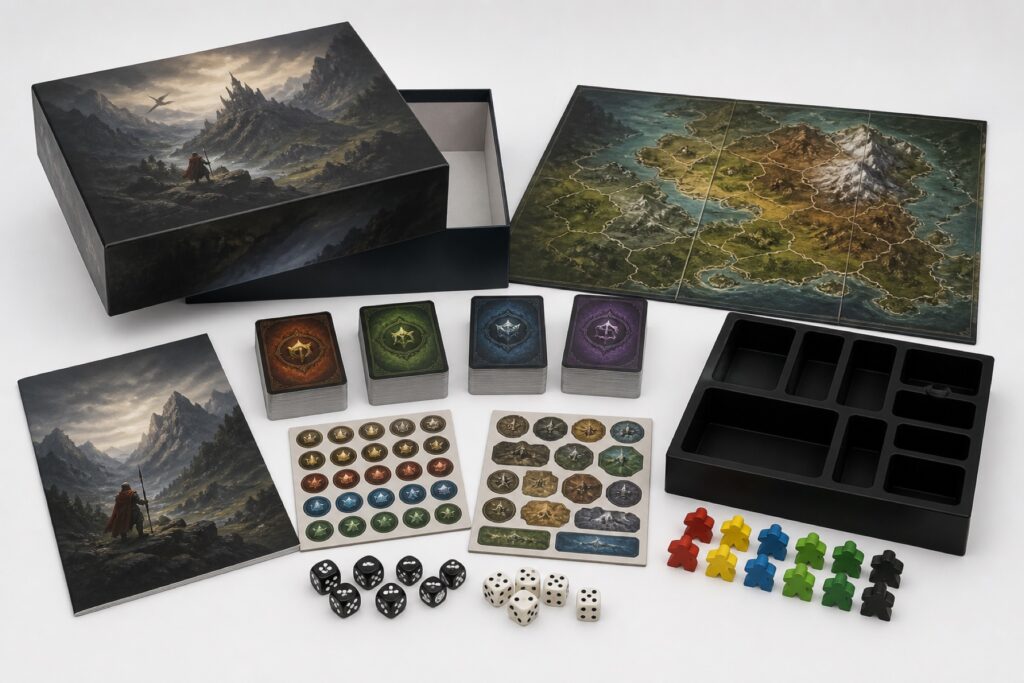
When publishers ask how much it costs to manufacture a board game in China, the answer starts with the product specification. A compact card-led game and a deluxe tabletop game with miniatures can have completely different production requirements.
A reliable quotation is built from the bill of materials (BOM), quantity, materials, finishes, assembly, testing and destination. Understanding these factors helps you compare quotations fairly without removing features that matter to players.
The Main Factors Behind a Board Game Quote
| Cost factor | What the manufacturer needs to know |
|---|---|
| Order quantity | Units required, expected reprints and acceptable MOQ |
| Printed components | Sizes, quantities, paper or board thickness and finishes |
| Custom accessories | Material, color, dimensions, tooling and quantity per game |
| Packaging | Box construction, insert, packing order and retail protection |
| Quality and compliance | Inspection standard, testing and target market requirements |
| Delivery | Destination, shipping method, carton limits and required date |
1. Order Quantity and MOQ
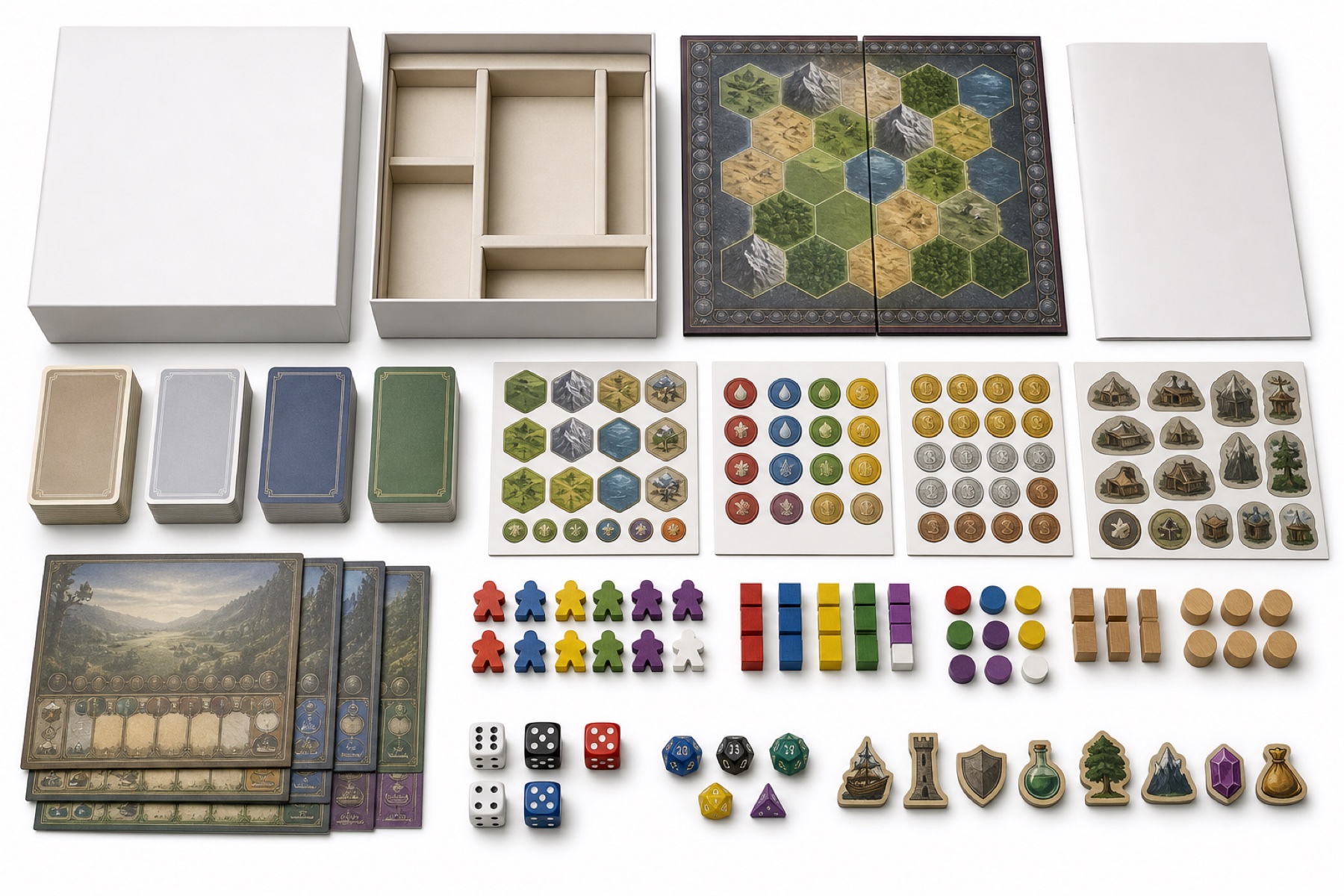
Quantity affects almost every part of board game manufacturing cost. Prepress, die-cutting and assembly setup are distributed across the run. A larger run usually lowers the unit cost, while a smaller run carries a higher share of fixed setup costs.
MOQ also depends on the component mix. Printed cards and boxes may support a different minimum than custom-molded plastic or metal accessories. Ask the manufacturer to compare two or three realistic quantities using the same specification.
2. Printed Components and Material Choices
Cards, boards, punchboards, rulebooks and boxes form the foundation of many quotations. Cost is affected by size, count, thickness, print coverage, coating and die-cut complexity.
A large folding board needs more material than a compact player board. Punchboards require accurate tooling, while card stock, core, finish and the number of unique faces all matter. Our board game components guide explains the main specifications.
3. Dice, Wood, Plastic, Resin and Metal Parts
Standard components are normally more economical than fully customized parts. Custom dice and wooden meeples add color and printing requirements, while plastic miniatures and molded inserts may require tooling.
Metal coins and markers can create a premium result, but plating, enamel, detail and packing add cost. Choose components according to the visual or gameplay value they deliver.
4. Box, Insert and Special Finishes
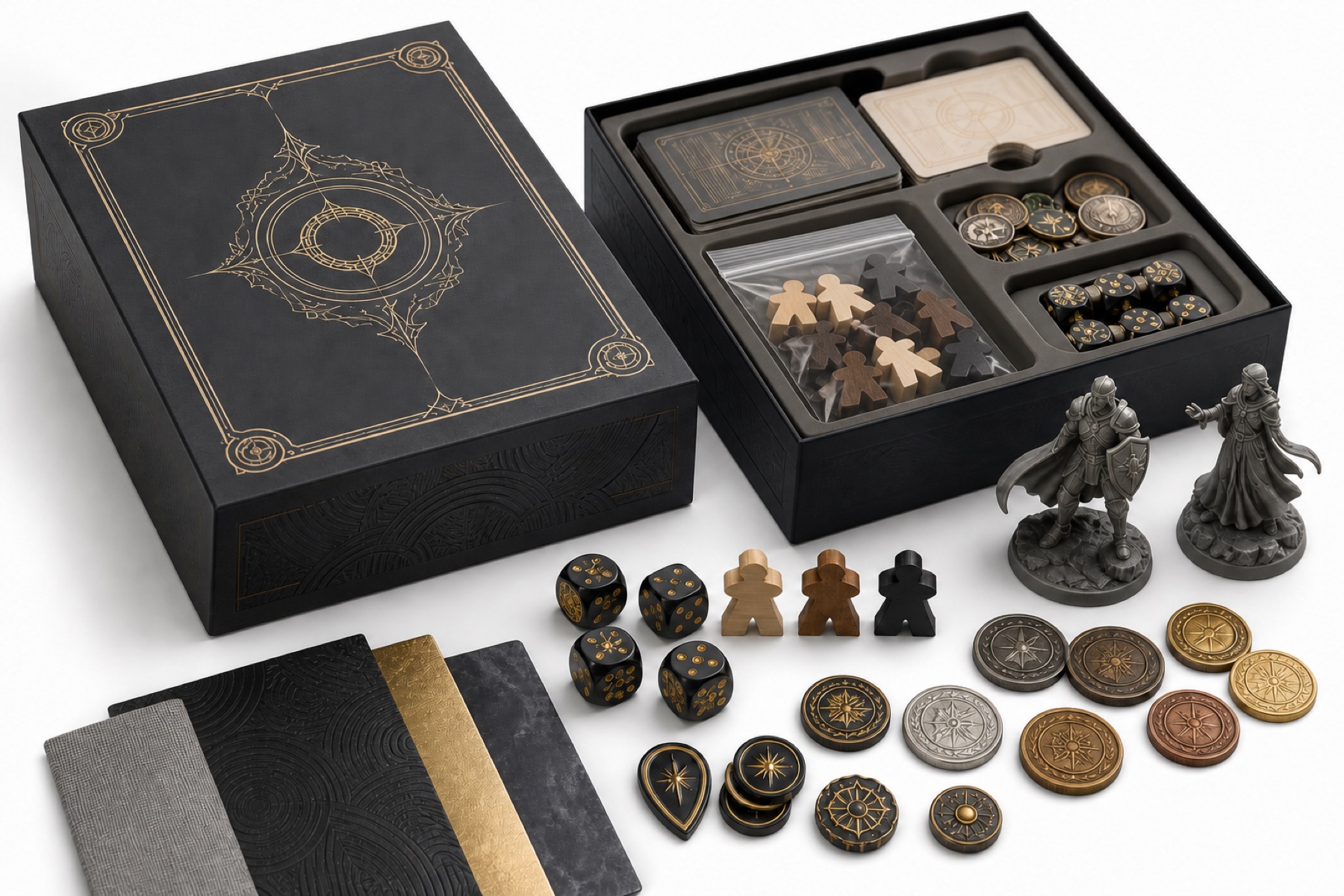
Packaging protects the product and shapes its retail presentation. Two-piece, magnetic and drawer boxes have different structures. Paperboard dividers, vacuum-formed trays, molded pulp and EVA inserts also carry different costs.
Foil, embossing, spot UV and specialty films can strengthen presentation, but each adds preparation and QC. Use premium finishes selectively. See our board game packaging options guide when planning the box and insert.
5. Sampling, Testing and Delivery
Sampling is separate from mass production. A prototype may use digital printing or substitute parts, while a pre-production sample confirms materials, colors, structure and packing. Custom tooling may require additional revisions.
Testing depends on the product, age grade and market. Freight depends on carton size, weight, destination and shipping method. These items should be separated from the manufacturing price.
How to Reduce Cost Without Weakening the Game
Rank components as essential, upgrade or optional. Standardize dimensions where practical, reduce unnecessary variations and avoid finishes that are not visible during play. A paperboard insert may suit some projects better than a custom plastic tray.
Make cost decisions before final artwork. Changing box size, token layout or component quantity after sampling can create new costs. Early review with a board game manufacturer in China helps compare alternatives before files are locked.
What to Send for an Accurate Quote
Prepare a BOM showing every component, size, material, quantity per game and finish. Include order quantity, destination, artwork status, delivery target and reference images. Mark undecided details and request suitable options.
A complete specification makes it easier to identify cost drivers and compare suppliers. Review the board game manufacturing process before requesting production pricing.
Frequently Asked Questions
Can a manufacturer quote from a prototype?
Yes, but a prototype should be supported by a written BOM. Photos alone may not confirm material thickness, component counts, finishes or packing requirements.
Does a lower MOQ always mean a lower total risk?
Not necessarily. A smaller run reduces inventory commitment but may increase unit cost. Compare quantity options against your sales plan, freight and expected reprint schedule.
What information has the greatest effect on quote accuracy?
Component quantities, dimensions, materials, finishes, packaging, order volume and destination are the most important starting points. Custom tooling and testing requirements should also be identified early.
Niceam Product supports custom board game manufacturing with printed components, packaging, books, selected accessories, assembly, quality control and global delivery planning. Send your BOM and project requirements for a manufacturing review and quotation.